

Article 5 of 5 in the State of Product Experience 2026 Collection
A brand is built over years: a logo refined until it’s instantly recognizable, a tone calibrated across a thousand touchpoints, a reputation earned one satisfied customer at a time.
And all that effort can go to waste in an instant due to a single product page error, according to new consumer research.
Syndigo’s State of Product Experience 2026, a global study of 8,736 consumers across Australia, Brazil, France, Germany, the UK, and the US, explored how product experiences impact what shoppers think of a brand. Every year, more shoppers quietly recalibrate what they think of a brand because of a page that failed to deliver what it promised, and that recalibration doesn’t reset the next time they see an ad.
Call that recalibration what it is: product experience doing brand work directly, every time a shopper reads a description, checks a review, or notices a photo that doesn’t match what showed up at their door.
The good news? The research shows it cuts both ways. Get it right, and the same mechanism builds loyalty that compounds for years. But get it wrong, and no amount of catchy slogans and iconic logos will save you.
Four years of the same warning
Syndigo’s State of Product Experience research has asked some version of the same question since 2023: does incomplete or inaccurate product information change how you see the brand behind it?
The answer has moved in one direction every single year: rising from 62% to 80%. Four separate annual studies, four consecutive increases, no sign of leveling off.
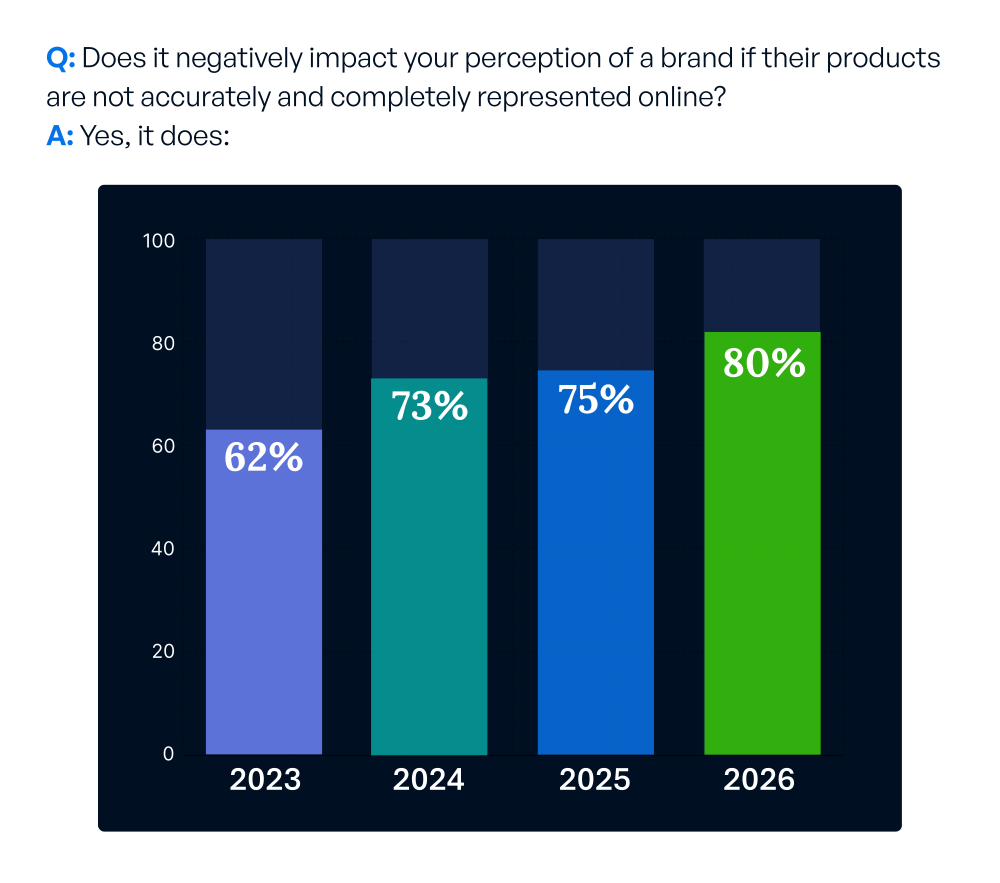
A trend this consistent marks a structural shift in where shoppers decide whether to trust a brand, and it’s happening on a page most brand teams never review.
It works the other way too
The reverse holds just as strongly: 76% of shoppers who get the complete, accurate product information they’re looking for are more likely to return to that brand or retailer for a similar purchase.
Product experience can inspire loyalty and generate lasting LTV. Brands spend heavily on campaigns to create exactly that kind of preference. The research says a well-built product page is quietly doing some of that same work for free, and a neglected one is spending the brand’s trust down without anyone noticing.
Why shoppers stopped taking your brand’s word for it
Part of why the swing has gotten this large is that shoppers no longer treat brand reputation as a stand-in for proof.
When Syndigo asked shoppers which three factors matter most when buying online, ratings and reviews (53%) and detailed product descriptions (52%) topped the list, ahead of a discount or deal (49%).
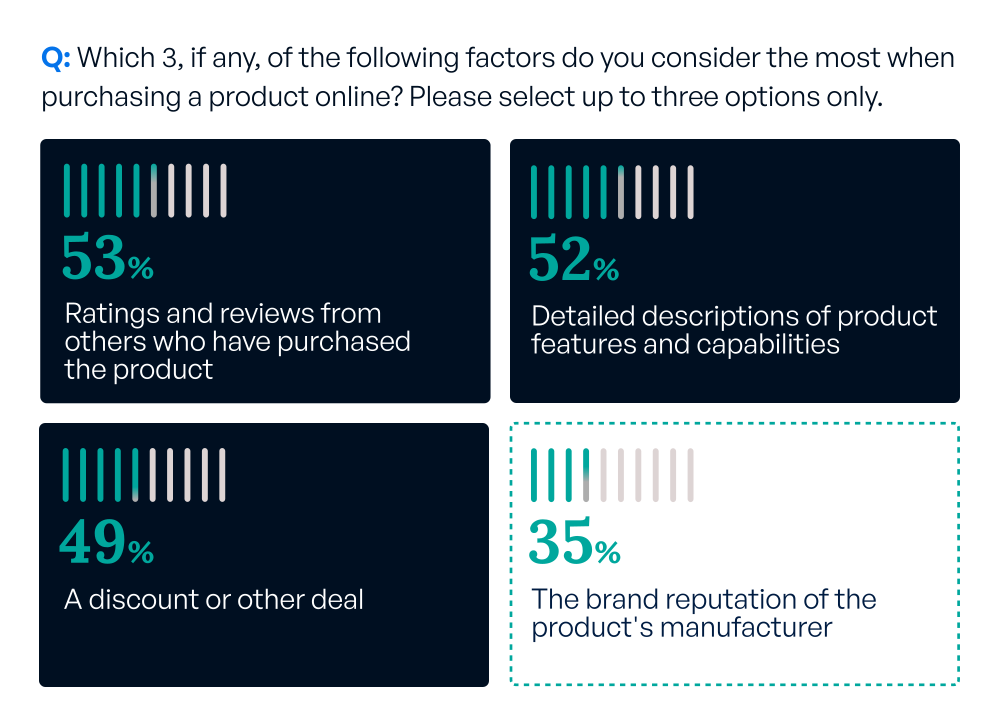
The manufacturer’s brand reputation trailed well behind at 35%, ranking below every other factor shown. The very thing entire brand budgets and teams are built to protect ranks behind something a product content team might write and syndicate in an afternoon.
A shopper who already trusts a brand still checks the page for confirmation: does this look like what I was told? Is there enough detail to trust it? Did other buyers find what they expected? When the page answers those questions, it extends the credibility the brand already earned. When it doesn’t, the shopper blames the brand itself, not whichever team wrote the page, and 83% say they’re likely to abandon a product page that lacks answers and go to a competitor instead.
AI only knows your brand through its data
The stakes just gained a second audience that never forms its own impression. An AI shopping assistant reads the record: the attributes, the description, the reviews, whatever structure exists around that item. It never sees the product, the packaging, or the in-store display. If that record is thin, contradictory, or stale, the assistant judges the brand by exactly what’s there, with no sense that the real product might be better.
25% of online shoppers say they’re more likely to buy a product an AI recommends, and that share will move as agentic shopping tools mature. A brand’s reputation with an AI system is built through the same product experience now shaping human brand perception, not through advertising. The two audiences are converging on the same source material, which means product experience is no longer just a conversion surface for people. It’s becoming the brand’s only interface with a growing category of buyer that can’t be charmed, only informed.
Brand governance has a blind spot
Most brand guidelines cover tone, logo use, approved imagery, and campaign messaging in detail. Almost none specify who checks whether the product experience, the description, the images, the reviews, the answers a shopper finds, still matches what the brand spent years earning the right to claim.
The asset brand governance is built to protect, reputation, now gets shaped more by reviews, descriptions, and even discounts than by anything a campaign says about it.
Closing that gap starts with giving product experience a named owner, the way campaigns already have one. That can begin small: pick a sample of live product pages this quarter, since they’re the easiest starting point, and read them the way a shopper would, not the way the system that generated them would. Ask whether the description still matches the product, whether the images reflect current packaging, and whether a reasonable question would go unanswered. Then ask who’s responsible for fixing what’s wrong, and whether that person has ever been in the same room as whoever approved last quarter’s campaign.
Brand and product teams too often operate as separate disciplines because they used to do separate work. The research says they’re now building the same thing, the brand built over years of investment, from two directions, often without comparing notes. Product experience is where that brand gets tested every day: and consumers say it’s the part worth protecting first.
Previously in this collection: Step aside, discounts: Reviews are the new leading purchase trigger
See what shoppers expect from every product experience and what wins the sale.