fechar
fechar
BLOG

Digital Product Passports, Retailer Requirements and 2D Barcodes: What Product Data Teams Need to Know 

Read Time:7 MINUTES
September 04, 2026
Dados do produto

Product data requirements are changing in several directions at once. For brands, the practical question is how to keep product information ready as those requirements evolve. 

Retailers keep revising the product information they require. Regulators are asking for more transparency and traceability data. Industry standards are connecting physical products to the digital information behind them. 

The problem is no longer whether change will happen. It is whether your organization can absorb it without turning every new requirement into a fire drill. 

That question matters because three major shifts are landing at once: Digital Product Passports, rising retailer content requirements, and the move to 2D barcodes under Sunrise 2027. They come from different places, but they create the same operational demand: structured, governed, current product data that can move wherever the market requires it. 

The challenge is not avoiding change. It is absorbing change without disruption. 

Webinar: Watch 3 Hot Topics Product Data Teams Can’t Afford to Miss on demand 

In the on-demand webinar, three Syndigo experts break down what each shift means for product data teams. Matt Leigh, Senior Vice President of Customer Success, covers retailer requirements and customer readiness. Kara Bianchi, Vice President of Commercial Success, explains 2D barcodes and GS1 Sunrise 2027. Moritz Hoffmann, Senior Director of Global Product Management, walks through Digital Product Passports and the product data behind them. 

Why Product Data Agility Matters 

For years, product setup followed a clean sequence: create the item, validate it, publish it, and move on. That model worked when requirements were relatively stable and updates arrived as occasional projects. 

Today, publication is no longer the end of the process. Retailer schemas evolve. Regulatory requirements phase in by category. Existing products become affected. Data must be updated, revalidated, and redistributed. 

Change is now a standing operating condition. 

That means readiness cannot be measured by whether a team can complete one compliance project or retailer update. It has to be measured by how quickly the team can answer four questions: 

  • What changed? 
  • Which products are affected? 
  • What data is missing? 
  • How quickly can we correct, validate, and distribute it? 

Teams that treat every requirement as a separate project will keep rebuilding the same process. Teams that build product data agility can use one trusted foundation for whatever comes next. 

Digital Product Passports: Start With Data Readiness 

A Digital Product Passport is a digital identity for a product. It stores comprehensive information about the product’s lifecycle, origins, and environmental impact. It connects the physical product with its digital information. 

It is tempting to think of a DPP as a webpage reached through a QR code. That is the visible part. The harder work sits underneath it: determining which products are in scope, mapping required attributes, collecting missing supplier data, managing access levels, registering records, publishing updates, and keeping the information available throughout the required lifecycle. 

For companies selling into the European Union, the timeline is already moving. Digital Product Passports become mandatory for batteries on February 18, 2027. Textiles and apparel, tires, aluminum, iron, and steel are expected to follow in 2028, with additional categories beginning in 2029 and beyond. 

What to do now: Start with an applicability assessment. Identify the categories and markets in scope, then compare the required DPP information with the data you already have. The earlier you expose ownership and supplier-data gaps, the less likely compliance becomes a last-minute collection exercise. 

Amazon and Walmart Product Data Requirements: Expect More Structure 

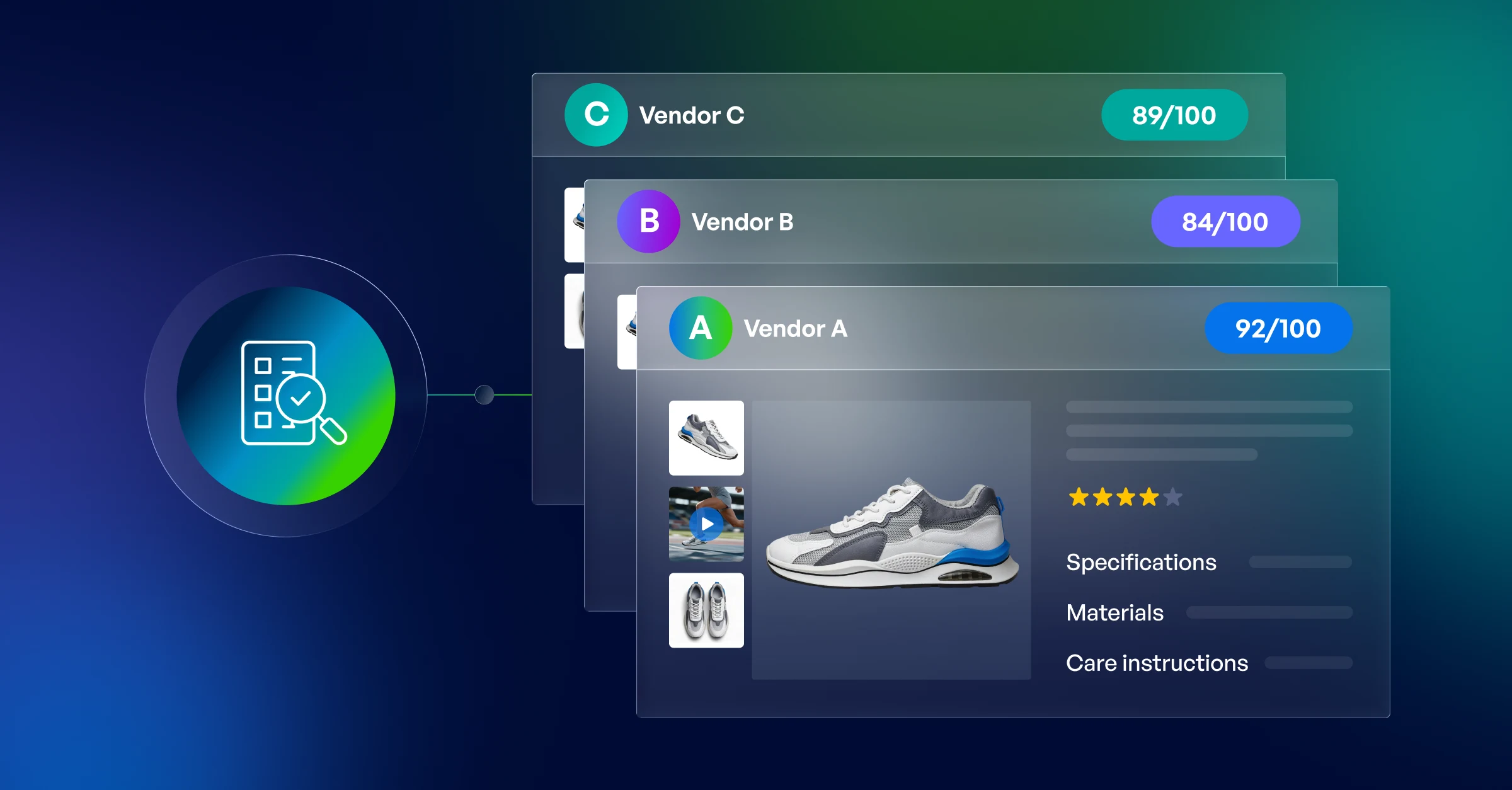
Amazon and Walmart are showing where retailer requirements are headed. Product titles are getting tighter. Generic fields are giving way to purpose-built attributes. Controlled values are replacing some free text. Retailers are also using AI to suggest or assemble shopper-facing content from the underlying product record. 

The shopper experience may look simpler. The data required behind it is getting more complex. 

A single title or description once carried brand, product name, variant, benefits, uses, and keywords. Now that information is increasingly separated into structured components that can support search, filtering, comparison, personalization, and AI-generated answers. 

This changes the job for brands. Meeting the minimum required fields is not enough. Product records must be: 

  • Structured to match each retailer’s fields and controlled values. 
  • Complete enough to support discovery and recommendation, not just publication. 
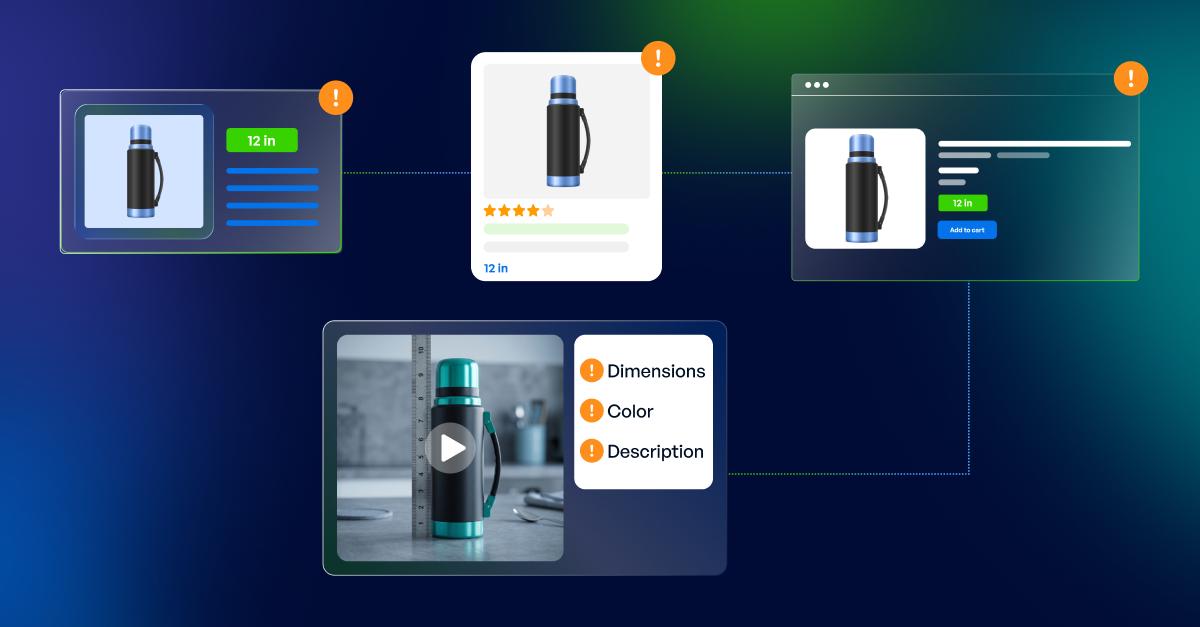
  • Continuously compliant as requirements change. 
  • Easy to update once and distribute everywhere without manual rework. 

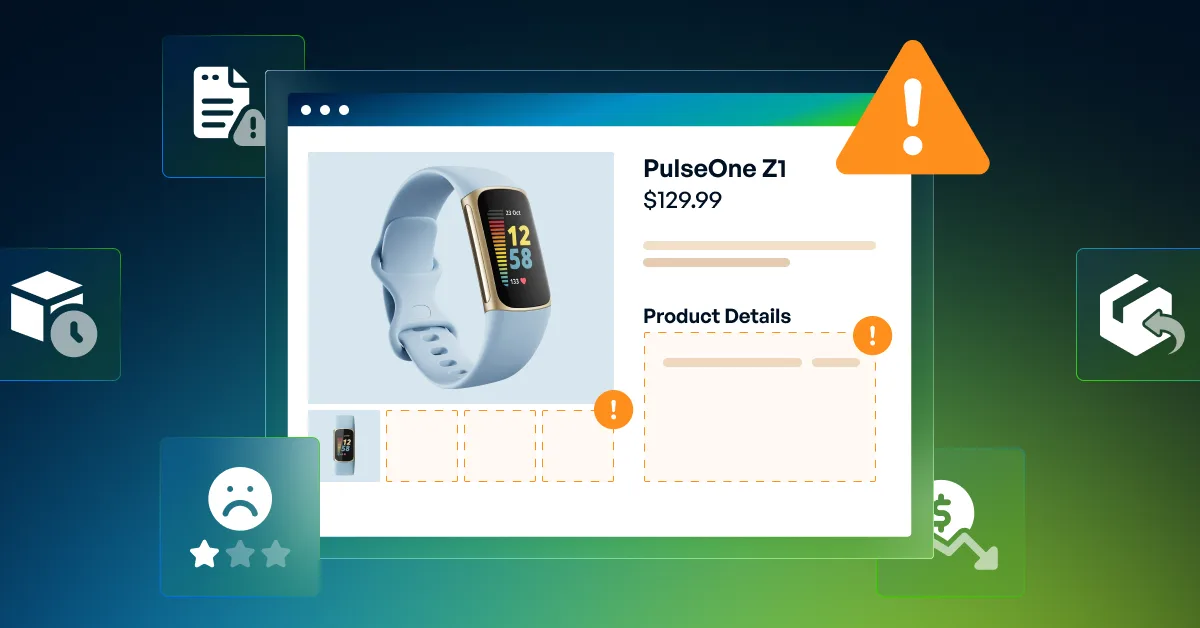
Your data now speaks for your product. A shopper may read it. A retailer’s system may validate it. An AI assistant may use it to decide whether your product belongs in an answer at all. If the record is incomplete or inconsistent, there may be no rejection or explanation. The product may simply be passed over. 

What to do now: Measure first-time acceptance by retailer and product category. Identify the attributes and rules behind recurring failures. Move validation upstream so you find content gaps before the retailer does. Then treat every rejection as evidence of a broader data or governance issue, not just a one-SKU problem. 

GS1 Sunrise 2027 and 2D Barcodes: Prepare the Data Behind the Code 

Sunrise 2027 is the global target for point-of-sale systems to accept GS1-compliant 2D barcodes. The familiar UPC is not being banned. The transition is expected to include dual marking, with 1D and 2D codes appearing together while retailers, packaging, and systems catch up. 

The difference is what the code can carry. A traditional UPC is largely an identifier. A 2D barcode can connect batch, lot, expiry, origin, traceability, and consumer-facing content through GS1 Digital Link. 

But the barcode is only a pointer. Its value depends on the information behind it being accurate, structured, and current. 

That is why Sunrise 2027 is not simply a packaging change. It touches artwork cycles, data ownership, scanning, retailer expectations, content governance, and the systems that keep the product record alive after the package ships. 

What to do now: Map the categories and retailers that will expect 2D codes. Add dual marking as packaging artwork naturally comes up for revision. Prepare the validated product data behind each code. Then test scanning at point of sale before scaling the program. 

Three Streams, One Product Data Foundation 

Digital Product Passports are driven by regulation. Retailer content changes are driven by commerce platforms. Sunrise 2027 is driven by an industry standard. On the surface, they are separate initiatives with different owners and timelines. 

Underneath, they require the same capabilities: 

  • Trusted product data that is structured, governed, and easy to find. 
  • Visibility into what changed and which products are affected. 
  • A scalable way to enrich or remediate impacted data. 
  • Validation against destination requirements before submission. 
  • Efficient distribution across every required channel. 

This is what product data agility looks like in practice. Know what you have. Know what changed. Adapt quickly. Validate and distribute with confidence. 

What Product Data Teams Can Do Now 

The webinar identifies practical steps teams can take now across all three areas: 

  • Audit your attributes. Check the coverage, ownership, and accuracy of the product data you already publish. 
  • Measure retailer acceptance. Review first-time acceptance and rejection reasons by retailer, not just overall publication volume. 
  • Start a DPP applicability assessment. Identify which product categories and markets are in scope, then map required information against the data you already have. 
  • Map your 2D barcode scope. Confirm which categories and retailers expect 2D codes and when packaging artwork cycles occur. 
  • Move validation earlier. Validate product data before syndication so gaps are found before a retailer rejects the item. 
  • Plan for dual marking. Add 2D barcodes alongside existing UPCs as packaging artwork naturally comes up for revision. 
  • Test before scaling. Confirm that codes scan correctly at the point of sale before expanding the program. 

The market will keep changing. The brands that succeed will not be the ones with the fewest disruptions. They will be the ones that can identify impact, update product data, validate it, and move it faster than the disruption can spread. 

Because product data is no longer something you set up once. It is business infrastructure. 

Sign up to watch 3 Hot Topics Product Data Teams Can’t Afford to Miss on demand