Product experience is reaching a breaking point
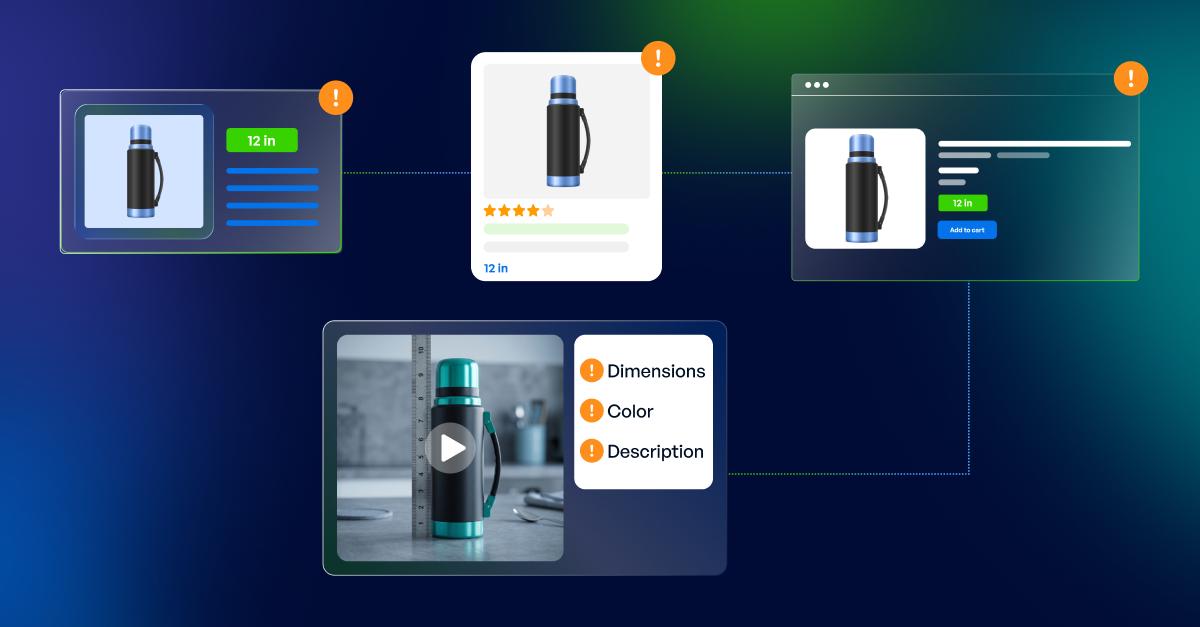
The way products show up across every channel, what we think of as product experience, has become significantly harder to manage.
The goals for brands and retailers haven’t changed much. Everyone is still working to deliver accurate, compelling, and compliant product experiences wherever customers shop.
But the environment those teams operate in is now always-on, increasingly fragmented, and shaped by algorithms, automation and an unpredictable economic environment.
New channels emerge. Retailer requirements evolve. Product discovery is mediated by AI systems, social platforms, and search algorithms rather than static pages. The result is a steady increase in the time, attention, and coordination required to meet even a baseline standard of quality.
The way product experience work is executed hasn’t kept pace with the environment it now operates in. This is a major problem for actors along the supply chain and buyer’s journey, especially brands and retailers. The stakes are high, and the environment is unforgiving.

In response to this pressure, a new field has emerged to unlock more scale and flexibility: Agentic Product Experience Management.
What is Agentic PXM?
Agentic Product Experience Management (PXM) is an operating model in which AI-driven agents continuously monitor, evaluate, and act on product experience data. They autonomously manage routine execution while keeping humans in control of strategy, policies, and goals.
Rather than relying exclusively on periodic, human-driven workflows, Agentic PXM introduces systems that can:
- Observe market and supply chain signals continuously
- Evaluate those signals against defined rules and goals
- Take predefined actions when confidence is high
- Escalate issues with context when human judgment is required
Agents make product experience work operational in a different way from traditional team structures or point AI solutions. They reduce the reliance on manual cycles of review, execution, and optimization, and instead enable more continuous, responsive execution within defined guardrails.
Importantly, Agentic PXM is not a single tool, nor is it a generic AI assistant or chatbot. It is not unrestricted automation, nor does it replace governance. Properly implemented, it is a model of governed execution where systems act quickly and consistently, but within boundaries that are transparent, auditable, and controlled.
From task-based to agentic
One useful way to think about Agentic PXM is to contrast it with how product experience work is commonly executed today.
In many organizations, PXM still follows a task-based model. Work is triggered manually, often in batches. Teams review content, respond to errors, and implement updates after issues surface downstream. Powerful automation does exist, but it is typically rules-based and limited to particular scenarios.
This approach was effective enough in a more stable environment. But as complexity has increased, it has introduced a growing gap between when something changes and when it is addressed.
Agentic PXM represents a shift toward a more continuous, more adaptive model of execution. Instead of relying on periodic reviews, systems monitor signals continuously. Instead of identifying issues after the fact, they evaluate and act in near real time. And instead of requiring manual intervention at every step, they automate repeatable actions while escalating exceptions when needed.
Why now: the forces driving this shift
Agentic PXM is not emerging in isolation. It is a response to several broader shifts shaping the commerce landscape.
Economic pressure is raising the stakes
Macroeconomic volatility, supply chain disruption, and pricing pressure are forcing brands and retailers to operate with greater efficiency. Consider just a few of the headwinds and complications facing commerce right now:
- 75% of U.S. consumers plan to trade down, switch brands, or buy less frequently due to tariff-driven price increases
- Amazon recently imposed 3.5% surcharge on third-party sellers earlier this year
- 72% of CEOs have already adjusted their growth strategies to respond to ongoing economic and geopolitical challenges
When margins are constrained, product experience becomes a more critical lever. Delays, inaccuracies, and inefficiencies are no longer minor operational issues—they have direct financial impact.
AI is reshaping how products are discovered
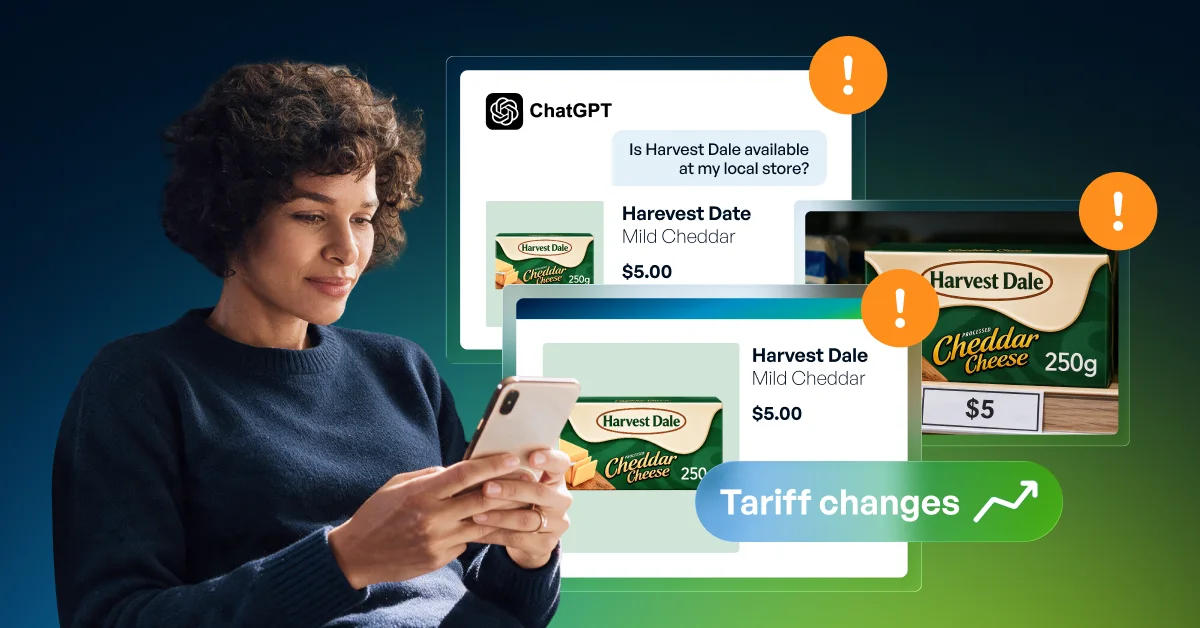
Product discovery is increasingly mediated by AI systems.
Consumers are beginning to ask questions rather than browse categories, shifting from navigating pages to interacting with assistants:
- Traffic from LLM platforms like ChatGPT and Gemini grew 527% year over year
- ChatGPT is now the #5 global website by monthly traffic
- 58% of shoppers use GenAI instead of traditional search to find recommendations.
This changes the requirements for product content. It must be structured, complete, and interpretable not just by people, but by machines that synthesize and present information dynamically.
Product content has become the deciding factor
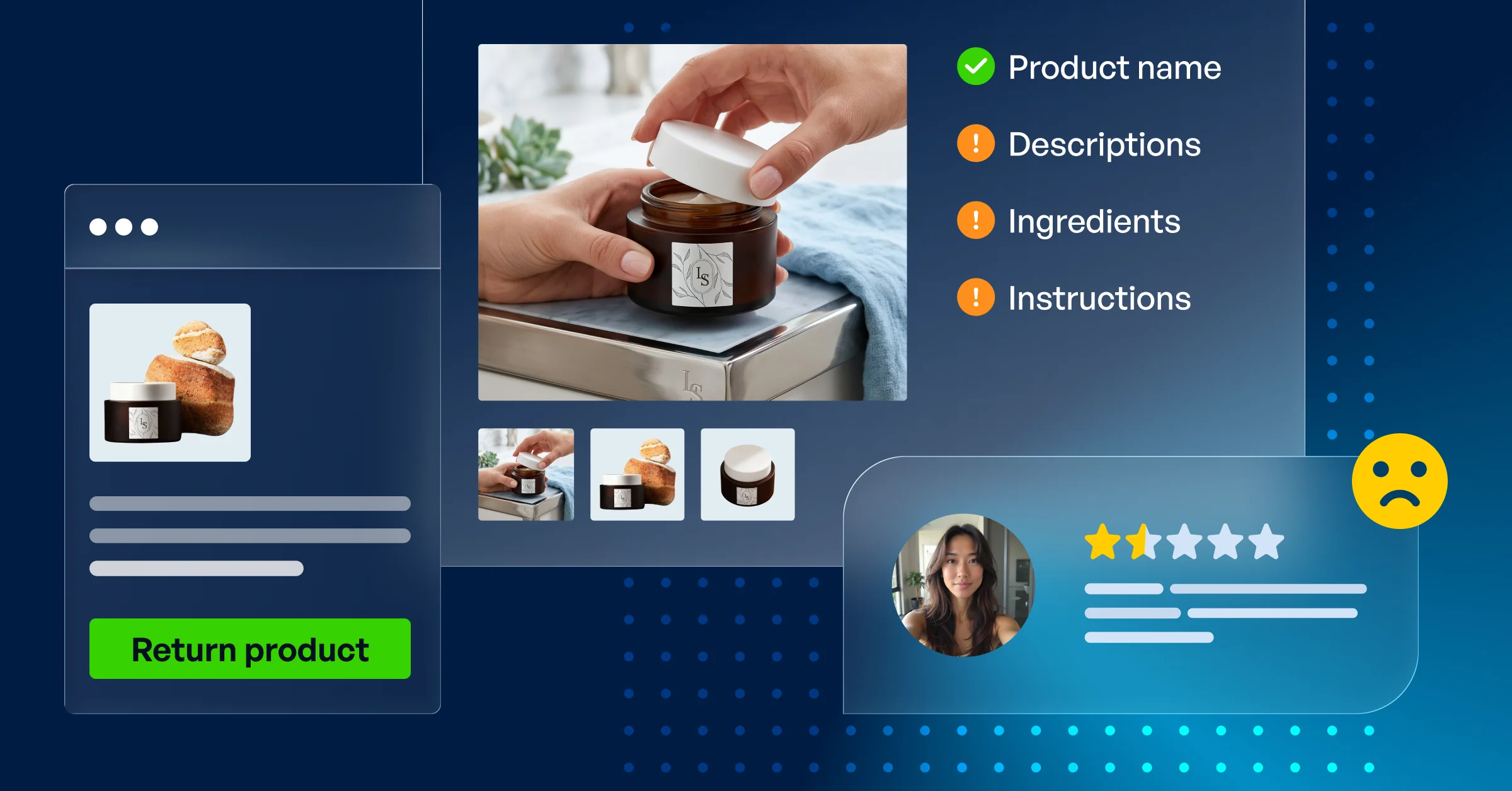
Shoppers consistently report that high-quality product content plays a decisive role in purchase decisions, often more so than other traditional factors like brand recognition.
- 85% of shoppers trust product content over brand loyalty
- 77% say user-generated content persuaded them to buy something they didn’t think they needed
When customers cannot find the information they need, they abandon purchases. When they can, they are more likely to convert and return.
Winning in low-loyalty environments requires innovative experiences
Consumers are more willing to switch brands than in the past. Familiarity alone is no longer sufficient to drive repeat purchase.
Winning increasingly depends on delivering experiences that are accurate, relevant, and easy to engage with across every touchpoint. Sephora’s development of a loyalty app within ChatGPT is one such example. But that kind of consistent innovation requires more dynamic adaptation than traditional workflows typically allow.
Enterprises are moving toward agentic AI
Across industries, organizations are exploring how AI agents can operate within workflows to reduce manual effort and improve responsiveness.
- 68% of retail executives expect agentic AI adoption in the next 12 to 24 months.
- AI agents can cut employees’ low-value work time by 25% to 40%
Product experience management, with its combination of high volume, repeatable tasks and dynamic conditions, is a natural domain for this shift.
Why task-based PXM struggles in this environment
Individually, each of these forces introduces additional pressure. Taken together, they change the fundamental requirements of how product experience work needs to function.
Many teams are already feeling the impact. Task-based workflows assume stability. Modern commerce environments are defined by constant change.
As product experience becomes more dynamic, the gap between change and response widens. Issues surface downstream in the form of retailer rejections, suppressed listings, inconsistent content, or missed opportunities.
Exception queues grow. Manual rework increases. Over time, teams spend less time improving product experiences and more time responding to breakdowns in execution.
What Agentic PXM offers
By introducing agents into product experience workflows, organizations begin to shift how execution happens.
Some of the most immediate benefits tend to include:
- Faster time to market through continuous onboarding and preparation
- Fewer errors and rejections by validating earlier in the process
- Higher content quality at scale through ongoing monitoring and improvement
- Broader catalog coverage, rather than focusing only on top-performing SKUs
- Greater consistency across systems, channels, and teams
- More effective use of human expertise, with less time spent on repetitive tasks
The key change is not simply speed. It is a move from reactive work toward ongoing, controlled execution.
Agentic PXM and the rise of agentic commerce
As AI becomes more embedded in commerce itself, a related concept is gaining traction: agentic commerce.
Agentic commerce refers to the role of AI agents in helping discover, compare, and even purchase products. These systems increasingly act as intermediaries between consumers and brands.
Agentic PXM plays a different role. It is inward-facing, focused on how product data and content are prepared, governed, and delivered within an organization.
The two are closely connected.
As more purchasing decisions are informed or influenced by AI systems, the quality, structure, and consistency of product data becomes even more important. Products that are well-described, complete, and machine-readable are more likely to be surfaced, recommended, and selected.
In this sense, Agentic PXM is a foundational capability for competing in an agentic commerce environment.
The role of humans doesn’t go away
Agentic PXM does not eliminate the need for human judgment. In many ways, it makes it more important.
As agents take on repeatable execution, people spend more time on:
- Defining policies and priorities
- Managing governance and compliance
- Handling ambiguous or high-risk scenarios
- Identifying opportunities for improvement
Instead of searching for issues, teams are better positioned to respond to them with context and focus on improving outcomes over time. Less effort spent on tedious, error-prone tasks becomes more time to be creative, strategic, and innovative.
Get ahead of the future of Product Experience Management
Agentic PXM can make teams more efficient, productive, and ready to scale for the unpredictable demands of commerce. And it’s not a theoretical future-state: agentic workflows are already active in leading PXM platforms. Discover everything you need to know about this new frontier, and how to get started, in our ebook.
A 5-part guide for agentically managing product experience at scale