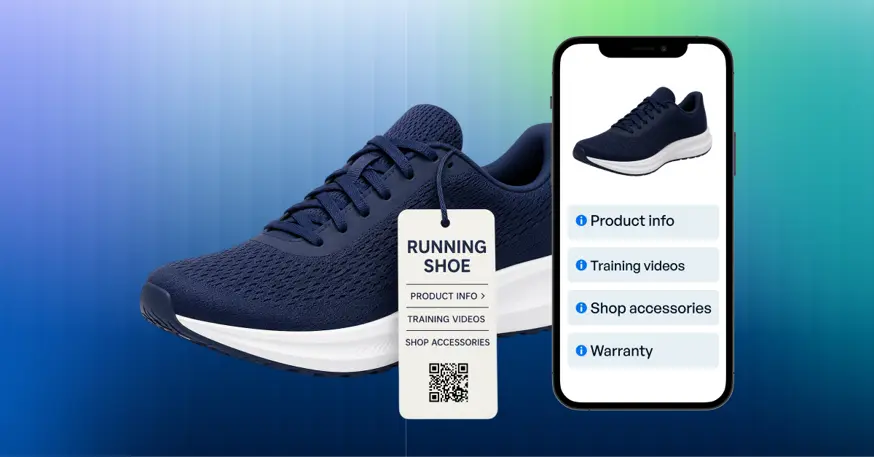


Le Digital Product Passport (DPP) deviendra obligatoire pour de nombreuses entreprises et mettra en même temps leurs données produit à l’épreuve. Même si le DPP fait partie du règlement européen sur l’écoconception des produits durables (ESPR), il va bien au-delà d’un simple projet de conformité : sans une base de données fiable, il sera difficile de satisfaire aux exigences. Des informations produit structurées, actuelles, traçables et évolutives sont donc indispensables. Pour les fabricants, les marques, les distributeurs et les grossistes, il s’agit de poser dès maintenant les bases du passeport numérique des produits : identifier les sources de données, adapter les processus, intégrer les fournisseurs et clarifier les responsabilités. L’intérêt est double : la préparation au Digital Product Passport contribue à la conformité, mais elle permet aussi d’améliorer la transparence produit, la communication sur la durabilité ainsi que l’expérience produit et l’expérience de marque.
La véritable opportunité va bien au-delà de la conformité au DPP. Elle crée également les conditions de processus plus efficaces, d’une meilleure qualité des données et de nouveaux services numériques. Selon le modèle économique, le DPP peut ouvrir de nouveaux points de contact avec les clients finaux, notamment pour les fabricants qui ne disposent pas encore d’activité D2C, et fournir de nouveaux enseignements sur leurs besoins. Le DPP est l’un des rares canaux permettant aux marques de diffuser directement du contenu auprès des clients. Investir dès maintenant dans la qualité des données, c’est donc renforcer à la fois la pérennité de l’entreprise et sa position sur le marché.
Points clés à retenir
- Le Digital Product Passport vise à renforcer la transparence des produits en Europe.
- Le principal défi ne réside pas dans la mise en œuvre technique du passeport numérique des produits, mais dans la collecte, la qualité, la structure et la disponibilité des données produit.
- Les entreprises ont besoin de temps pour intégrer les sources de données, les processus, les systèmes et les fournisseurs.
- Le PIM, le MDM et le PXM constituent une base essentielle pour gérer à grande échelle les données pertinentes pour le DPP.
- Bien mis en œuvre, le DPP peut renforcer la conformité, la confiance, la réputation de marque et l’expérience produit.
En bref : qu’est-ce que le Digital Product Passport ?
Le Digital Product Passport, ou DPP, est une exigence centrale du règlement européen sur l’écoconception des produits durables (ESPR). Il s’agit d’un jeu de données produit numérique qui met à disposition des informations pertinentes sur l’origine, les matériaux, la durabilité, la réparation, le recyclage et la conformité d’un produit.
Il doit rendre accessibles les informations essentielles tout au long du cycle de vie du produit afin de favoriser la transparence, la traçabilité et l’économie circulaire. Point important : le passeport numérique des produits n’est pas simplement une page produit ou un QR code, c’est-à-dire un élément qui permet d’accéder aux informations. Sa valeur réelle réside dans les données produit structurées, lisibles par machine et fiables qui se trouvent derrière.
Quelles informations contient un Digital Product Passport ?
Un Digital Product Passport contient des informations différentes selon les groupes de produits. Il peut notamment inclure :
- des identifiants produit uniques, par exemple GTIN, numéro de série ou ID produit
- l’origine et le lieu de fabrication
- les matériaux et composants
- les données environnementales et de durabilité
- les données relatives au CO₂ et aux ressources
- des informations sur la réparabilité
- des informations sur la réutilisation et le recyclage
- des consignes d’élimination
- des certificats et preuves de conformité
- des informations de sécurité et de qualité
- la documentation relative à la chaîne d’approvisionnement et à la traçabilité
Pour les entreprises, cela signifie que de nombreuses données pertinentes pour le DPP existent déjà quelque part dans l’entreprise ou dans la chaîne d’approvisionnement. Le défi consiste à les réunir de manière structurée, à les valider et à les maintenir à jour.
Quel rôle jouent les codes 2D dans le Digital Product Passport ?
Les codes 2D sont souvent mentionnés dans le contexte du Digital Product Passport (DPP). Il s’agit de marquages modernes capables de fournir beaucoup plus d’informations que les codes-barres classiques. Ils peuvent être lus à la fois par des smartphones et par des systèmes de caisse.
Un code, plusieurs informations
Le principal avantage : selon l’utilisateur et le cas d’usage, un seul et même code 2D peut donner accès à différents contenus. Les clients finaux peuvent par exemple consulter des informations sur l’origine, les matériaux, la réparation, la durabilité ou le recyclage. Les distributeurs et les acteurs logistiques peuvent quant à eux accéder aux numéros de lot ou de série, aux données de traçabilité ou aux informations relatives aux rappels.
| Composant | Objectif |
| Code 2D / QR code | permet l’accès numérique |
| Page produit | affiche les informations |
| Digital Product Passport | fournit des informations claires sur le cycle de vie du produit |
| PIM et MDM | permettent de gérer et de piloter les données sources |
Les codes 2D comme base du DPP
Le passeport numérique des produits n’est qu’une des nombreuses applications pouvant être réalisées grâce à un code 2D. Avec des outils comme Syndigo Link Manager, le Digital Product Passport, les informations produit, le rich media et d’autres contenus numériques peuvent être regroupés derrière un seul code 2D et diffusés de manière adaptée à chaque cible. L’organisation de normalisation GS1 accélère cette évolution avec son initiative Sunrise 2027 , qui vise à faire des codes 2D modernes le nouveau standard dans le commerce.
Qui est concerné par le Digital Product Passport ?
Le Digital Product Passport concerne toutes les entreprises de certains secteurs qui mettent des produits à disposition sur le marché de l’UE ou qui sont intégrées dans les chaînes de valeur correspondantes. Il ne s’agit pas uniquement des fabricants : les marques, distributeurs, marketplaces, importateurs, grossistes, fournisseurs et entreprises situées hors de l’UE peuvent également être concernés dès lors qu’ils vendent des produits en Europe.
Qui assume quel rôle dans le passeport numérique des produits ?
Les fabricants et les marques sont généralement responsables de l’exhaustivité et de l’exactitude des informations produit.
Les distributeurs et marketplaces doivent rendre les informations DPP accessibles là où les produits sont proposés ou vendus, en magasin, en ligne ou sur des pages produit numériques.
Les fournisseurs, sous-traitants, producteurs et partenaires logistiques fournissent souvent les données de matériaux, informations d’origine, certificats et autres justificatifs au sein de la chaîne d’approvisionnement.
Comment le passeport numérique des produits évolue-t-il en Europe ?
Le cadre réglementaire du DPP se construit au niveau européen. Dans la mise en œuvre concrète, le sujet n’avance toutefois pas partout au même rythme. Certains groupes de produits sont priorisés différemment. Pour les batteries, le passeport numérique des produits devrait devenir obligatoire à partir de 2027; pour d’autres groupes comme les textiles ou les meubles, des exigences sont attendues à partir de 2028 et dans les années suivantes.
Certains secteurs économiques travaillent donc déjà activement à la mise en œuvre du DPP et lancent des projets pilotes ou des initiatives concrètes. En parallèle, des écosystèmes de données intersectoriels émergent pour permettre l’échange de données produit et de durabilité tout au long de la chaîne de valeur.
Si certaines industries agissent déjà, de nombreuses entreprises observent encore la clarification progressive des exigences liées au Digital Product Passport. Même si les détails ne sont pas encore définis pour de nombreux groupes de produits, il y a peu de raisons d’attendre pour se préparer. Même lorsque l’entrée en vigueur semble encore éloignée, les entreprises ne doivent pas sous-estimer le délai nécessaire. Construire une base de données fiable, intégrer les fournisseurs et adapter les processus demande du temps. Dans le même temps, les entreprises profitent bien avant l’obligation légale d’une meilleure qualité de données, d’une plus grande transparence et d’une meilleure communication produit.
Les entreprises internationales ne devraient pas repousser le sujet ni attendre passivement les échéances définitives. Elles doivent plutôt suivre dès maintenant les marchés, secteurs et réseaux de partenaires qui avancent plus rapidement. Les entreprises actives dans plusieurs pays européens ont besoin d’une stratégie de données capable d’absorber des rythmes et exigences différents.
Pourquoi les données représentent-elles un défi majeur pour le Digital Product Passport ?
Pour beaucoup d’entreprises, le passeport numérique des produits évoque d’abord des QR codes, des étiquettes ou des pages produit numériques. .Ces éléments sont importants, car ils garantissent l’accès aux informations requises. Mais un aspect essentiel est souvent négligé : la qualité des données sous-jacentes. Sans base de données fiable et actuelle, il devient difficile de fournir des informations cohérentes.
Si les informations sur les matériaux sont incomplètes, les certificats obsolètes ou les attributs produit mal harmonisés, des risques apparaissent pour la conformité, la transparence et l’expérience client.
C’est précisément là que se situe le vrai point critique : les informations produit pertinentes sont souvent réparties entre de nombreux systèmes, fournisseurs et services. Dans la pratique, elles se trouvent par exemple dans :
- des systèmes ERP
- des systèmes PIM
- des systèmes PLM
- des plateformes MDM
- des fichiers Excel
- des portails fournisseurs
- des référentiels documentaires
- des systèmes de durabilité et ESG
- des plateformes e-commerce
- des flux de marketplaces
Cette fragmentation compte parmi les plus grands défis de la mise en œuvre du DPP.
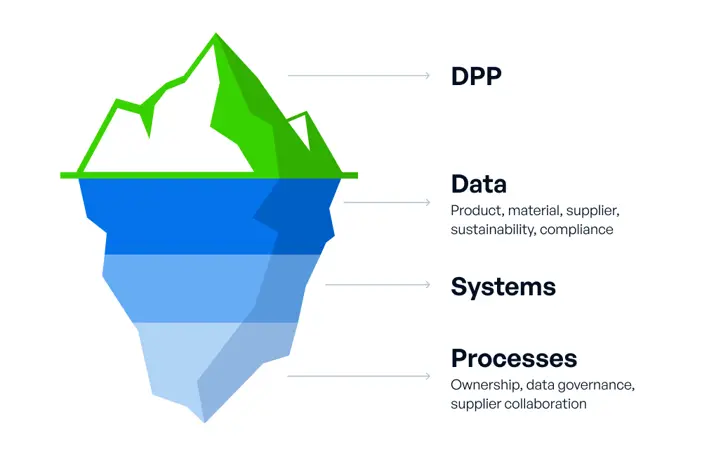
Le passeport numérique des produits rend visible la manière dont les entreprises ont organisé leurs processus, systèmes, données produit et responsabilités.
Pourquoi la DPP-readiness soutient aussi l’AI-readiness
Les entreprises qui investissent dans la préparation au passeport numérique des produits améliorent souvent précisément les fondations de données nécessaires au succès de leurs initiatives d’IA.
- L’IA dépend de données produit exactes, structurées et fiables.
- Les initiatives DPP aident à rendre visibles les lacunes de données et les faiblesses de gouvernance.
- Les informations produit consolidées améliorent la cohérence entre les canaux et les systèmes.
- La même base de données produit peut soutenir à la fois la conformité réglementaire et les expériences produit alimentées par l’IA.
Pour de nombreuses entreprises, la préparation au passeport numérique des produits devient ainsi une occasion d’améliorer la qualité, l’accessibilité et la gouvernance globales des informations produit.
Pourquoi les entreprises doivent agir maintenant
Pour réussir la mise en œuvre du Digital Product Passport, les entreprises doivent commencer tôt leur préparation. Ni une base de données solide ni les processus et structures nécessaires ne se construisent du jour au lendemain.
À cela s’ajoute le fait que l’effort augmente avec la taille du catalogue et la complexité de la chaîne d’approvisionnement. Plus les produits, fournisseurs et partenaires sont nombreux, plus les modèles de données structurés, les responsabilités claires, l’automatisation et une gouvernance des données bien pensée deviennent essentiels.
Raison 1 : le Digital Product Passport ne se met pas en place rapidement
- La création et l’introduction d’un passeport numérique des produits nécessitent un travail préparatoire important.
- Les entreprises doivent d’abord déterminer :
- Quelles informations sont requises ?
- Quels systèmes contiennent déjà ces informations ?
- Comment consolider les données provenant de différentes sources ?
- Comment les informations doivent-elles être validées ?
- Qui est responsable de la gestion et de la mise à jour de chaque ensemble de données ?
Ce qui peut sembler faisable pour de petits assortiments devient vite un défi avec des milliers ou des millions d’articles. Les processus manuels, les demandes individuelles et les exports ad hoc ne peuvent alors presque plus être mis à l’échelle efficacement.
Raison 2 : les lacunes de données doivent être visibles tôt
De nombreuses entreprises disposent déjà d’une grande partie des informations nécessaires au DPP. Mais il est souvent difficile de savoir si ces données sont complètes, à jour ou clairement associées aux produits concernés. Un inventaire des données constitue donc une première étape déterminante.
- Il s’agit notamment de répondre aux questions suivantes :
- Quelles informations sont déjà disponibles ?
- Quelles données manquent encore ?
- Dans quelle mesure les informations existantes sont-elles actuelles et fiables ?
- Quels justificatifs doivent être complétés ou actualisés ?
- Quelles données les fournisseurs doivent-ils fournir ?
- Quelles informations doivent être accessibles au public ?
Quelles informations doivent être accessibles au public ? Plus les entreprises créent tôt de la transparence sur leur patrimoine de données, plus il est facile de combler les lacunes et d’éviter des solutions de dernière minute.
Raison 3 : obtenir les données DPP de partenaires externes demande du temps
Lorsque les produits ne sont pas entièrement développés ou fabriqués en interne, de nombreuses informations pertinentes pour le DPP se trouvent chez les fournisseurs, partenaires matériaux, producteurs ou prestataires logistiques.
- Les entreprises devraient donc commencer leur préparation dès aujourd’hui en définissant :
- Quelles données doivent être fournies par les partenaires externes
- Quelles normes de qualité doivent être appliquées
- Quels formats doivent être utilisés
- Comment les mises à jour seront gérées dans le temps
Sans coopération structurée, les validations manuelles, la double saisie et les informations contradictoires apparaissent rapidement.
Une étude montre un important besoin de rattrapage
Selon une étude récente de KPMG1 97 % des entreprises ont déjà entendu parler du Digital Product Passport, mais seulement 33 % déclarent bien comprendre les exigences au sens de l’ESPR et leurs implications pour leur propre organisation. Seules 19 % se considèrent bien préparées à l’introduction du DPP. Cela montre que de nombreuses entreprises sont encore à un stade précoce de mise en œuvre ou n’ont pas encore commencé.
Pourquoi le passeport numérique des produits n’est pas seulement un projet IT
Le passeport numérique des produits n’est pas un projet IT isolé : il exige la collaboration de plusieurs fonctions de l’entreprise. Les systèmes, interfaces et modèles de données sont importants, mais la mise en œuvre du Digital Product Passport va bien au-delà des questions techniques.
- Les équipes à impliquer incluent notamment :
- Product Management
- les achats
- Durabilité
- Mentions Légales
- Supply Chain
- Marketing
- E-commerce
- Service client
- et l’IT
La raison est simple : les données produit naissent, évoluent et sont utilisées dans de nombreux services. Pour que le DPP fournisse des informations fiables, chaque partie prenante doit comprendre son rôle dans le processus de données.
Le Digital Product Passport exige une gouvernance des données transversale
Pour le DPP, il ne suffit pas de collecter des données. Les entreprises doivent également définir qui maintient, approuve, met à jour et valide les informations. La gouvernance des données fournit les règles et responsabilités nécessaires. En l’absence de telles structures, le risque d’informations contradictoires, obsolètes ou erronées augmente. Dans le cadre du passeport numérique des produits, ces incohérences peuvent non seulement perturber les processus internes, mais aussi devenir visibles pour les clients, partenaires commerciaux ou autorités.
La mise en œuvre du DPP nécessite une gestion du changement à l’échelle de l’entreprise
Les nouveaux processus et responsabilités ne peuvent pas être établis uniquement par des systèmes ou des directives. Les collaborateurs doivent comprendre pourquoi certaines informations sont nécessaires, comment elles sont utilisées et quelle contribution elles apportent au passeport numérique des produits. Sans cette compréhension, des processus parallèles apparaissent rapidement, par exemple sous forme de fichiers Excel, de contournements manuels, de documentations parallèles ou de validations non harmonisées. Une gestion du changement structurée aide à ancrer durablement les nouvelles méthodes de travail dans l’entreprise.
Quel rôle jouent le PIM, le MDM et le PXM dans le passeport numérique des produits ?
Le PIM, le MDM et le PXM aident les entreprises à structurer, maintenir, valider et diffuser de manière centralisée les données produit pertinentes pour le DPP sur différents canaux. Ensemble, ils contribuent à maintenir une qualité de données élevée, à soutenir la gouvernance des données et à répondre aux exigences croissantes de l’ESPR pour le passeport numérique des produits.
Le PIM comme base de données produit structurées
Un système de Product Information Management (PIM) aide les entreprises à gérer centralement les attributs produit, spécifications techniques, descriptions, médias, certificats et autres informations liées aux produits. Une grande partie des données nécessaires au Digital Product Passport provient directement de ces données produit. Sans PIM structuré, il devient difficile de maintenir les données de manière cohérente et de les diffuser sur différents canaux. À mesure que les assortiments produits se développent, un système PIM centralisé permet aux entreprises de standardiser leurs données produit, de réduire les efforts manuels et de s’assurer que chaque mise à jour est appliquée de façon cohérente sur l’ensemble des points de contact clients.
Le MDM pour des données fiables entre différentes sources
Le Master Data Management (MDM) va au-delà des seules données produit. Il relie les informations relatives aux produits, fournisseurs, sites, clients, matériaux et données de référence, ce qui est particulièrement important pour le DPP.
Cette capacité est particulièrement importante dans le cadre du Digital Product Passport, car les informations concernant l’origine des produits, les processus de fabrication, les chaînes d’approvisionnement et les données de durabilité ne sont généralement pas stockées dans un système unique. Elles résultent plutôt de la mise en relation et de la gestion cohérente de données provenant de plusieurs domaines de l’entreprise. Une stratégie MDM efficace contribue ainsi à améliorer la qualité des données, à limiter les incohérences et à garantir une conformité fiable aux exigences du passeport numérique des produits (DPP).
Le PXM pour des expériences produit utilisables
Alors que le PIM et le MDM se concentrent sur la gestion des données produit, le Product Experience Management (PXM) veille à ce que ces données soient non seulement exactes, mais aussi faciles à comprendre, pertinentes et facilement accessibles. Les clients, les distributeurs, les détaillants, les partenaires de service et les autorités réglementaires ont tous besoin de types d’informations produit différents. Le PXM permet aux entreprises de fournir des instructions de réparation, des conseils d’entretien, des informations sur la durabilité, des détails sur le recyclage et d’autres contenus produit dans le bon contexte, via les bons canaux et pour les bonnes audiences. Le résultat va au-delà de la simple conformité réglementaire : il contribue à offrir une meilleure expérience client et à renforcer la valeur globale du Digital Product Passport.
Exigences ESPR pour le passeport numérique des produits et base de données en un coup d’œil
| Exigence DPP | Ce dont les entreprises ont besoin | Systèmes pertinents |
| Identification du produit | identifiants uniques et accès numérique aux informations | PIM, MDM |
| Informations sur les matériaux | données structurées sur les matériaux et composants | PIM, PLM, MDM |
| les données environnementales et de durabilité | informations sur le CO₂, le recyclage et la réparation | systèmes ESG, PIM, MDM |
| Preuves de conformité | certificats, rapports de test, documents réglementaires | DAM, PIM, MDM |
| Actualité | processus clairs de maintenance, contrôle et validation | workflow, gouvernance des données, PXM |
| Publication | mise à disposition adaptée aux canaux et aux audiences | PXM, syndication, service DPP |
Le tableau montre que les différentes exigences DPP dépendent de plusieurs sources de données et systèmes. Seule l’interaction entre PIM, MDM, PXM et d’autres solutions permet de fournir des informations DPP cohérentes.
Du projet de conformité ESPR à une opportunité pour la marque et la réputation
De nombreuses entreprises communiquent déjà sur la durabilité. Mais les clients, partenaires commerciaux et autorités attendent de plus en plus des preuves traçables plutôt que des déclarations générales. Le passeport numérique des produits peut aider à fournir des données de durabilité plus concrètes, vérifiables et cohérentes.
Au-delà de cela, le Digital Product Passport peut aussi améliorer les expériences de service et d’usage. Les consignes d’entretien, instructions de réparation, informations sur les pièces de rechange ou options de recyclage peuvent être rendues accessibles numériquement et reliées aux informations produit existantes. Le DPP devient ainsi un instrument qui associe conformité, utilité pour le client et communication de marque.
Plus que la conformité : les avantages du DPP en un coup d’œil
- Fournir des preuves traçables pour les informations de durabilité :
Le passeport numérique des produits peut réduire les risques de greenwashing en reliant les déclarations de durabilité à des données fiables sur les matériaux, l’origine, les certificats et le cycle de vie. - Renforcer la confiance grâce à des informations produit transparentes :
Lorsque les clients peuvent comprendre de quoi un produit est composé, d’où il vient et comment il peut être réparé ou recyclé, la transparence devient concrète et renforce la confiance. - Rendre les données produit accessibles tout au long du cycle de vie :
Les informations sur la réparation, l’entretien, les pièces de rechange ou le recyclage peuvent être fournies de manière centralisée et rester disponibles dans la durée. - Étendre les expériences de service et de produit numériques :
Le DPP permet de proposer des informations pertinentes à la bonne audience et dans le bon contexte d’utilisation. - Améliorer la collaboration tout au long de la chaîne de valeur :
Des informations produit uniformes et structurées facilitent l’échange d’informations entre fabricants, fournisseurs, distributeurs et autres partenaires. - Renforcer la réputation de marque :
Les entreprises qui communiquent de manière transparente et vérifiable peuvent accroître leur crédibilité et se différencier positivement de la concurrence.
Cinq étapes pour se préparer au Digital Product Passport
Les entreprises peuvent se préparer de manière structurée au Digital Product Passport si elles considèrent ensemble la stratégie de données, la base de données, la technologie, la collaboration et la valeur métier. Les cinq étapes suivantes aident à créer les conditions d’une mise en œuvre réussie du DPP.
1.Développer une stratégie de données
La première question consiste à définir l’objectif poursuivi avec le DPP. S’agit-il uniquement de conformité ? Ou faut-il aussi améliorer la transparence produit, la communication sur la durabilité, l’expérience client et l’efficacité opérationnelle ?
2.Obtenir une vue d’ensemble de la base de données
La mise en œuvre du DPP exige de réunir de nombreuses informations. Les entreprises doivent donc identifier tôt les données produit, matériaux, fournisseurs, durabilité et conformité déjà disponibles ainsi que les lacunes existantes. Il ne s’agit pas seulement de savoir quelles données sont disponibles. La transparence sur leur actualité, leur mode de maintenance et leur association claire aux produits concernés est tout aussi importante. Seules les entreprises qui connaissent leur base de données peuvent compléter les informations manquantes de manière ciblée et éviter les solutions de dernière minute.
3.Évaluer la technologie et l’architecture
Pour fournir des informations DPP cohérentes et évolutives, les entreprises ont besoin d’un paysage système adapté. Celui-ci doit permettre de gérer, valider, enrichir et diffuser les données produit de manière structurée sur différents canaux.
- Les conditions importantes incluent notamment :
- des modèles de données flexibles
- des identifiants produit uniques
- des interfaces avec les systèmes internes et externes
- des règles de validation
- le multilinguisme pour les entreprises internationales
- la scalabilité sur de grands assortiments
Les systèmes PIM, MDM et PXM jouent ici un rôle central, car ils permettent de gérer les données produit de manière cohérente et de les mettre à disposition pour différents cas d’usage.
4.Organiser la collaboration au sein de la chaîne d’approvisionnement
Le DPP ne nécessite pas seulement une base de données fiable ; il suppose aussi des processus coordonnés entre les entreprises impliquées. Il faut échanger, actualiser et maintenir les informations de manière traçable. Les entreprises doivent donc définir tôt quelles données sont attendues des partenaires, quelles exigences de qualité s’appliquent et comment les informations seront fournies. Des standards clairs, des processus définis et des interfaces techniques aident à éviter les ruptures de médias, la double saisie, les informations contradictoires et les lacunes de données.
5.Définir la valeur métier
Le passeport numérique des produits ne doit pas être considéré uniquement comme une obligation réglementaire.
Bien utilisé, il peut aussi aider à créer de la transparence, à communiquer de manière crédible sur la durabilité et à développer des offres de services numériques. Les entreprises devraient donc définir tôt la valeur métier qu’elles associent au DPP. En considérant la qualité des données, les processus et la technologie au-delà de la conformité, elles peuvent prioriser les investissements de manière plus ciblée et relier davantage le Digital Product Passport à leurs objectifs d’entreprise.
Conclusion : pour le Digital Product Passport, tout se joue dans la base de données et la gouvernance
L’introduction du Digital Product Passport se fera progressivement, mais la préparation doit commencer dès maintenant. Le DPP rend visible la maturité des entreprises en matière de données produit, de processus et de responsabilités. Celles qui disposent d’une base de données solide créent les conditions de la conformité, de la transparence et de nouveaux services numériques. Celles qui s’appuient sur des processus manuels et des silos de données isolés ne pourront répondre aux exigences qu’au prix d’efforts considérables. C’est pourquoi il est utile d’investir tôt dans la qualité des données, la gouvernance des données et des processus évolutifs. Le succès du DPP se joue finalement là où les données produit sont créées, maintenues et gouvernées
FAQ : questions fréquentes sur le Digital Product Passport
A Digital Product Passport (DPP) est un jeu de données produit numérique qui fournit des informations pertinentes sur l’origine, les matériaux, la durabilité, la réparation, le recyclage et la conformité d’un produit. Il vise à accroître la transparence des produits et à soutenir l’économie circulaire. .
Non. Un QR code peut permettre l’accès au passeport numérique des produits, mais il ne constitue pas le passeport lui-même. Le DPP repose sur des données produit structurées, product information fiables et lisibles par machine.
L’introduction suivra le calendrier de mise en œuvre défini dans l’ESPR, avec des catégories de produits concernées à des moments différents.
Les entreprises devraient toutefois commencer dès maintenant à se préparer au Digital Product Passport, car la construction de la base de données, l’intégration des systèmes et la coordination avec les fournisseurs demandent du temps.
Sont concernées les entreprises de certains secteurs ui mettent des produits à disposition sur le marché de l’UE. Cela peut inclure les fabricants, marques, distributeurs, importateurs, grossistes, marketplaces et entreprises situées hors de l’UE, dès lors qu’elles vendent des produits dans l’UE.
Selon le groupe de produits, des DPP données sur les matériaux, l’origine, la fabrication, la durabilité, l’empreinte carbone, la réparation, la réutilisation, le recyclage, l’élimination, les certificats et la conformité peuvent être requises.FAQ : questions fréquentes sur le Digital Product Passport
Les informations produit pertinentes constituent la base du passeport numérique des produits. Dans de nombreuses entreprises, ces données sont toutefois réparties entre différents systèmes, fournisseurs et services. Pour répondre aux exigences du Digital Product Passport, elles doivent être réunies, maintenues et actualisées de manière structurée.
Les listes Excel ne conviennent pas aux processus DPP évolutifs, car elles deviennent vite obsolètes, sont sujettes aux erreurs et sont difficiles à contrôler sur de grands assortiments, chaînes d’approvisionnement et canaux. Le passeport numérique des produits exige des données structurées, des responsabilités claires et des processus automatisables. Cela suppose une base de données centrale comme Source unique de vérité, capable de fournir des informations cohérentes et actuelles. Les fichiers Excel décentralisés atteignent rapidement leurs limites.
Le PIM aide à gérer les informations produit de manière structurée.
Le MDM relie les informations sur les produits, fournisseurs, sites, matériaux et autres données de référence, et garantit une base de données cohérente. Les données de référence, comme les classifications, unités de mesure ou indications de pays, sont gérées centralement. Ensemble, le PIM et le MDM constituent une base importante pour des processus DPP évolutifs.
Non. Le passeport numérique des produits est certes porté par des exigences réglementaires, mais il peut aussi renforcer la transparence, la confiance, la communication sur la durabilité, la réputation de marque et les expériences produit. L’élément décisif reste la fiabilité des données sous-jacentes.
Le passeport numérique des produits peut contribuer à réduire les risques de greenwashing en reliant les déclarations de durabilité à des données produit concrètes, des preuves et des informations sur le cycle de vie. Les affirmations deviennent ainsi plus vérifiables et moins dépendantes de promesses marketing générales.