

By Tarun Chandrasekhar, President and Chief Product Officer, Syndigo
I was at NRF when Sundar Pichai laid out Google’s view of the “AI platform shift” in retail, and one message came through clearly: agentic commerce is moving from concept to real operating infrastructure.
Google’s Universal Commerce Protocol (UCP) is a concrete signal that the industry is standardizing how AI agents discover products, evaluate options, present offers, and complete checkout while preserving the retailer’s role and the customer relationship.
For brands and retailers, Google’s announcement is more than a channel update. UCP is a shift in the point of decision.
What Google announced, and why it matters
In Google’s NRF remarks and accompanying commerce updates, a few highlights stood out:
- Scale and urgency: Google cited retail customers processing 8.3 trillion tokens in December 2024, growing to 90+ trillion a year later, reinforcing how quickly AI usage is accelerating.
- The shopping substratum is already massive: Google’s Shopping Graph is described as having 50+ billion product listings, with 2+ billion refreshed every hour, and those assets are now being pulled into more conversational experiences.
- UCP as the connective tissue: Google positions UCP as an open, cross-ecosystem “common language” spanning the full shopping journey, designed to work across verticals and be compatible with other agent protocols (Agent2Agent, Agent Payments Protocol, and Model Context Protocol).
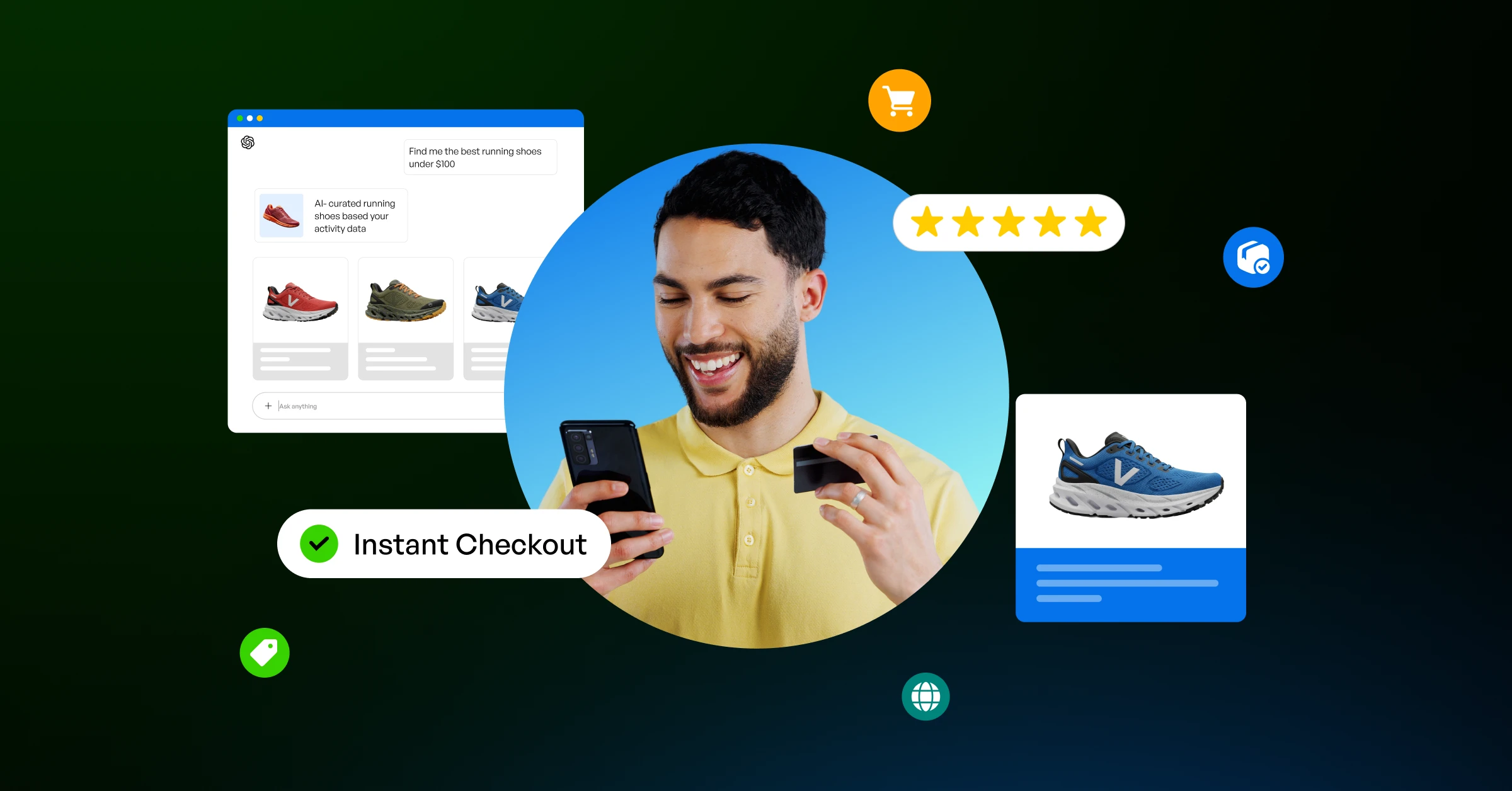
- Native checkout on AI surfaces: UCP is intended to power checkout directly within AI Mode in Search and the Gemini app, using Google Pay (and PayPal “soon”), with the retailer remaining the seller of record.
- New consumer and merchant experiences around UCP:
- Business Agent, a branded, merchant-controlled agent experience in Search.
- New Merchant Center attributes for conversational discovery, including question answering and compatibility/substitute context.
- Direct Offers, an ads pilot to present offer-level value directly in AI Mode.
A third-party NRF flash summary I reviewed framed these as Google’s five big consumer “agentic commerce” moves: UCP, a new checkout feature, expanded catalog feeds, Direct Offers, and Business Agent. That same summary also called out Wing expansion with Walmart, consistent with Google’s own remarks about expanding Wing deliveries to additional metros, including Houston.
The bigger pattern: protocols are multiplying, and the data bar is rising
Google is not acting in isolation. Over the last year, we have seen major AI platforms move from “answering questions” to “completing transactions.”
OpenAI’s Agentic Commerce Protocol (ACP) similarly formalizes how merchants share structured product data and support agent-driven checkout flows. OpenAI’s developer documentation describes a product feed spec and an agentic checkout spec, with frequent refresh expectations (as often as every 15 minutes) to keep price and availability current.
This is exactly why, when ACP emerged, we launched Syndigo OpenAI Connect and Syndigo GEO: to help brands and retailers send product content directly into these AI commerce endpoints, and to optimize content for discoverability and accuracy across LLM platforms.
What changes with UCP is the confirmation that this shift is not a single platform bet. We are entering a multi-agent, multi-protocol world where structured product data is the “source code” of commerce.
Why structured, high-quality product data is now a growth strategy
In traditional eCommerce, bad product data hurts conversion. In agentic commerce, bad product data prevents selection.
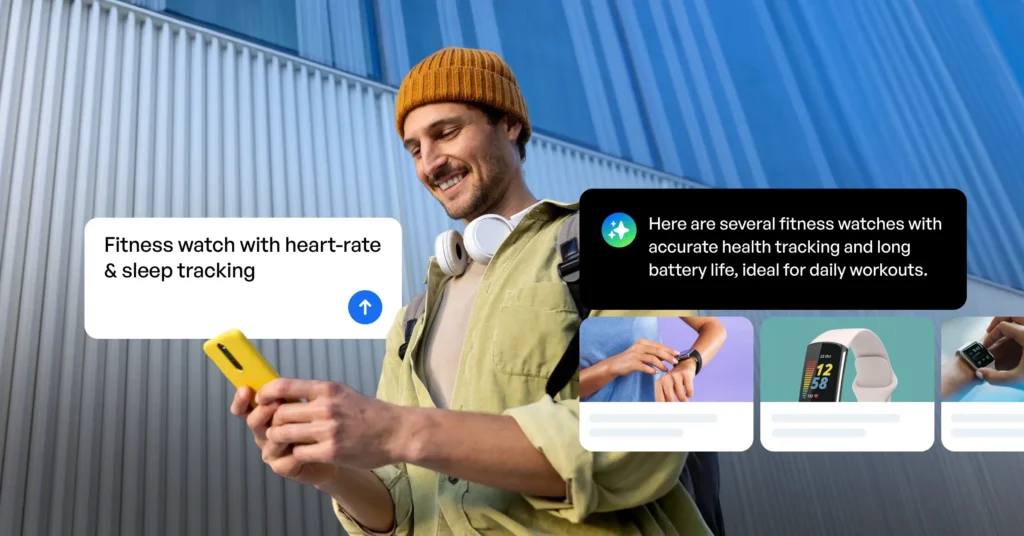
As the interface shifts from pages to conversations, the “digital shelf” becomes an AI response. Your products are being summarized, compared, filtered, and recommended by machines, often without the user ever seeing a PDP. That makes a few things non-negotiable:
- Precision: IDs, titles, variants, pack sizes, nutrition/allergens, sustainability claims, compatibility, and substitutions need to be complete and unambiguous.
- Freshness: Inventory, availability, and price need a refresh cadence that matches how fast AI surfaces are updating. (OpenAI Developers)
- Context: The “why” behind a choice is increasingly built from attributes like Q&A, reviews, certifications, usage guidance, and media context. Google explicitly called out new Merchant Center attributes aimed at this conversational layer.
- Trust and provenance: Retailers and consumers will demand auditability. At Syndigo, we’ve been focused on ensuring product attributes can carry source and governance signals so the resulting experience is trusted and verifiable.
Sundar’s point that the customer relationship must remain “front and center” resonates here. Agentic commerce should not reduce retailers to fulfillment endpoints. The winning model is one where retailers and brands preserve their voice, their offers, and their relationship, but do it through standardized interfaces that agents can reliably consume.
What this means for brands and retailers right now
If you are a brand or retailer asking “what do I do next,” here’s the practical answer: treat product data readiness as an agentic commerce launch plan.
Three actions that will pay off regardless of which protocol wins share:
1. Build an AI-ready product truth layer
- Normalize identifiers, variants, and taxonomy across channels
- Enrich the attributes agents will need to decide (compatibility, substitutions, usage constraints, certifications)
- Make price and availability operationally “real-time enough” for AI surfaces
2. Turn richer content into machine-usable content
- Convert “enhanced content” into structured, referenceable components (claims, FAQs, ingredients/nutrition, sustainability)
- Ensure customer content like ratings and reviews is usable for summaries and comparisons
3. Prepare for agent-native merchandising and offers
- Offers, loyalty, bundles, and shipping value are moving into the conversation layer
- Google’s Direct Offers and UCP-enabled checkout flows make it clear the offer object is becoming first-class data, not just a marketing message
Where Syndigo fits, and why we’re excited about UCP
At Syndigo, we have spent years helping brands and retailers build the structured, high-quality product foundation needed to win across channels. The difference now is that the channel is not just a retailer site or a marketplace. It’s an AI agent deciding what to show, what to recommend, and what to let a shopper buy instantly.
Syndigo Product Experience Cloud (PXC) was built to operationalize product experience at scale across a broad brand-retail network, and our agentic commerce work extends that foundation into AI commerce endpoints.
- Syndigo OpenAI Connect is designed as a direct feed into AI commerce interfaces, aligned to protocol specifications like ACP.
- Syndigo GEO is focused on ensuring your product content is optimized for how LLMs discover, interpret, and present products, including richer media and customer content.
Google’s UCP reinforces the direction we have been investing in: commerce will be increasingly mediated by agents, and the companies who win will be the ones who treat product data quality, structure, and governance as a strategic asset, not a back-office task.
Looking ahead
UCP is a meaningful step toward interoperability in agentic commerce. It also raises the standard for every brand and retailer: if the AI layer is the new storefront, then your product content must be accurate, structured, and activation-ready across multiple agent surfaces.
We are excited to see how this space evolves, and we are committed to helping customers enrich product content, govern it with trust, and activate it across the emerging agentic commerce ecosystem, whether that’s Google’s UCP, OpenAI’s ACP, or the next protocol that gains traction.
TLDR: the winners in agentic commerce will not be the loudest adopters. They’ll be the most prepared, because their data can be confidently used by machines to make decisions on behalf of people.