Schließen
Schließen
Blog

AI Reads Facts, Not Pages: What Brands Must Fix to Win in the Age of Agentic Commerce

Lesezeit: 5 Minuten
August 06, 2026
Agentic PXM

AI is rapidly changing how products get discovered.

During the 2025 holiday season, AI-referred traffic to retail sites surged, and shoppers arriving through AI recommendations converted at a higher rate than traditional traffic sources. That shift signals something important: the next battleground for commerce isn’t just search rankings. It’s whether AI can understand, trust, and recommend your products in the first place.

That’s the challenge brands face as agentic commerce moves from concept to reality. AI shopping assistants, conversational search experiences, and autonomous purchasing agents are all reshaping how products are evaluated. And the brands that win won’t necessarily have the best marketing copy. They’ll have the best data.

Product Data Is No Longer Just Content

One of the biggest themes from the webinar was that brands need to stop thinking of product information as content and start treating it as infrastructure.

Traditional ecommerce was built around human shoppers. A customer could land on a product detail page, interpret images, fill in information gaps, and make reasonable assumptions. AI doesn’t work that way.

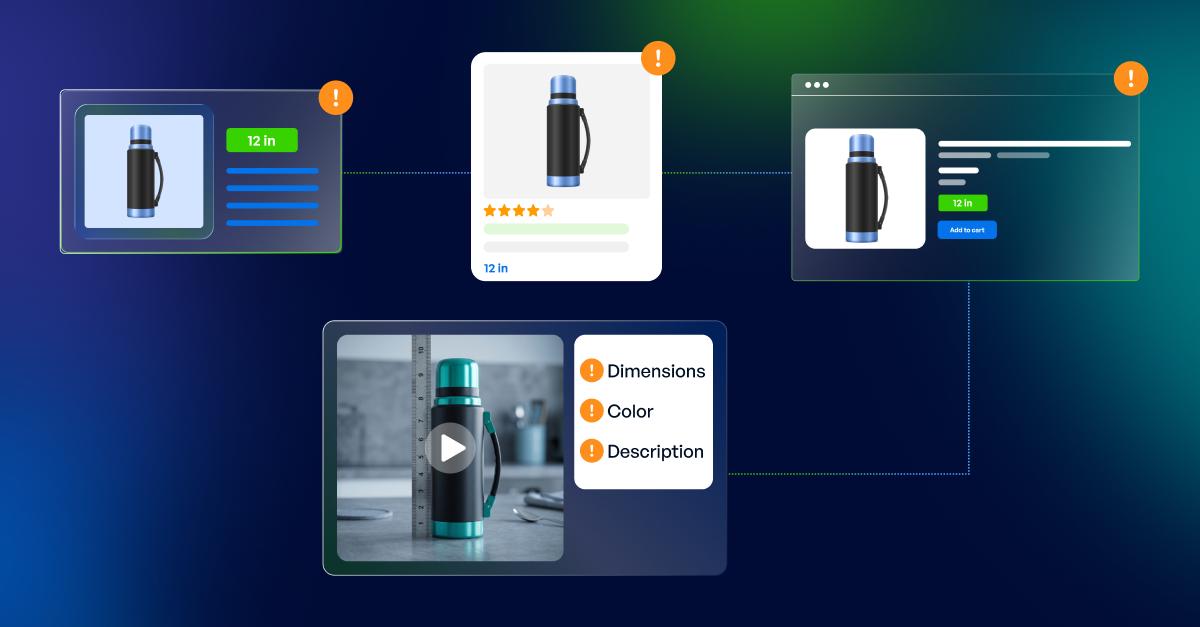
Large language models evaluate structured facts. They look for validation, consistency, and trust signals. If information is incomplete, ambiguous, or unsupported, the model may simply move on to another product that provides clearer answers.

In other words, products aren’t competing only for shopper attention anymore. They’re competing for AI confidence.

That’s why investments in product information management, master data management, and product experience management are becoming foundational to future commerce strategies.

Why Most Product Catalogs Aren’t Ready

The surprising statistic shared during the discussion was that less than 1% of ecommerce product pages currently meet the minimum criteria for reliable recommendation by large language models.

That gap doesn’t exist because brands haven’t invested in content. Most have spent years improving digital shelf experiences, optimizing product detail pages, and strengthening search visibility.

The problem is that those efforts were largely designed for people, not machines.

Many product pages are filled with persuasive marketing language but lack the structured, verifiable information AI systems rely on. Claims such as “best-in-class” or “industry-leading” may sound convincing to shoppers, but without evidence or supporting context, they carry very little value for AI recommendation engines.

The result is a massive opportunity for brands that can bridge the gap first.

The Future of Visibility Goes Beyond SEO

The conversation also explored how optimization itself is evolving.

Traditional SEO remains important, but brands are increasingly navigating new concepts such as Generative Engine Optimization (GEO) and Agent Engine Optimization (AEO).

SEO focuses on ranking in search results.

GEO focuses on being cited inside AI-generated answers.

AEO focuses on becoming the product an AI shopping assistant actively recommends or purchases on a shopper’s behalf.

While those may sound like different challenges, the underlying solution is remarkably consistent: trusted, structured, complete product data.

The same foundation that improves digital shelf performance today is what will support visibility across AI-driven commerce experiences tomorrow.

What AI Actually Looks For

Brands don’t need to reinvent their entire content strategy. They need to strengthen the information underneath it.

The webinar highlighted several signals that consistently improve AI readiness:

  • Complete structured attributes that clearly define what a product is and how it should be used.
  • Rich media supported by machine-readable metadata.
  • Ratings and reviews that provide third-party validation.
  • Trustworthy product claims backed by evidence and sources.
  • Fresh, governed data that stays accurate over time.

Together, these elements create the foundation for what many organizations are now calling AI-ready product data. They also strengthen other commerce initiatives, including digital shelf optimization, product content syndication, and product data enrichment efforts already underway across many organizations.

The Good News: Most Brands Are Closer Than They Think

Perhaps the most encouraging takeaway was that this isn’t a rip-and-replace moment.

Brands with mature digital shelf strategies already have much of the groundwork in place. Many have invested in content syndication, governance processes, ratings and reviews programs, and product enrichment initiatives.

The challenge now is measuring where gaps exist and prioritizing the areas that directly influence AI recommendations.

In many cases, the fastest path to improvement comes from focusing on the products that drive the most revenue, strengthening category-specific attributes, and adding validation behind important product claims. Those are often the changes that move a product from simply being discoverable to becoming recommendable.

The Real Opportunity in Agentic Commerce

The rise of AI shopping assistants, AI commerce agents, and agentic commerce platforms doesn’t mean brands need a completely new strategy.

It means the industry is returning to something that has always mattered: data quality.

The organizations that invest in complete, trusted, structured product information today will be better positioned not only for AI-driven shopping experiences, but also for whatever comes next.

Because the names may change, the requirement won’t.

Products that are easy for AI to understand are far more likely to be chosen.

And in commerce, chosen beats found every time.