


SUCCESS STORY


Master data decides how fast ALPLA can answer a basic question about its own operations. The company is replacing a patchwork of systems with one governed foundation, built with Syndigo and implementation partner valantic, and proven in a scoped proof of concept. Build work is now under way for the first group of entities.

Public ALPLA company information, 2025 financial year.
Ask the same question in two places and get two different answers. That is the problem ALPLA’s master data programme set out to solve. Differing data definitions, standards and procedures across a broad and complex business made simple questions slow to answer.
At ALPLA, master data is a business responsibility, not an IT housekeeping task. The team recognised that technology alone would not solve the problem: it needed clear ownership, agreed rules and defined processes. Rather than treating it as a software project, ALPLA’s team determined once and for all what essential data entities like a site, a machine or a production tool actually mean — and who has the authority to change that definition.
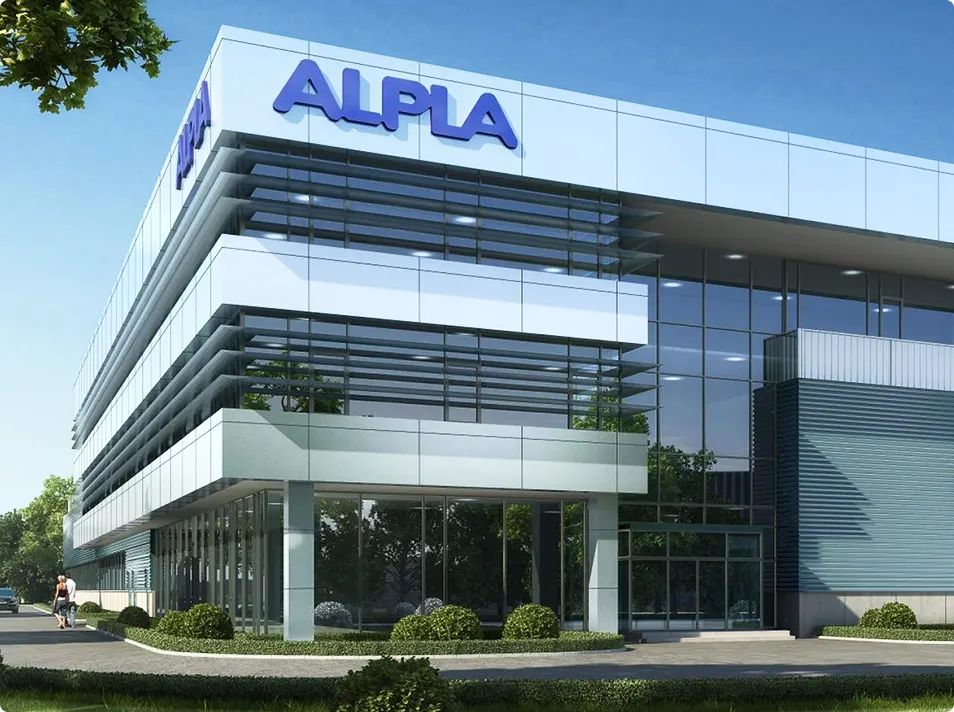
ALPLA has produced plastic packaging since 1955 and remains owned by its founding family. Of its 206 production sites, 66 are in-house operations based at customer sites.
In master data terms, an object or entity is a distinct real-world thing the business needs to identify and manage. Over time, information about the objects ALPLA runs on (sites, machines, production tools and more) had built up across more than one system, each created at a different time for a different purpose. Every system was accurate on its own terms, but those terms did not agree with each other. Changes were often requested informally instead of through a defined process, and ownership of a given record was not centrally agreed. Reconstructing the history of a change was hardest exactly when it mattered most.
The fragmented data and definitions caused friction across the business. The problems were rarely dramatic, but they added up to a steady drag on ordinary work: reports reconciled by hand before anyone would present them, the same asset showing up under different identifiers, questions about a number that ended in a meeting instead of a quick lookup. Nobody could say quickly which figure was right, and proving it took time, every time.
ALPLA was not looking for a tool that simply cleans up bad data. It needed a platform that could manage many kinds of business data, from assets and locations to products and business partners, within one governed model. Managing each kind separately would only recreate the same fragmentation at a higher level. Syndigo Master Data Management (MDM) offered that breadth as a cloud platform with data quality built in from the start: validation, matching and merging, and enrichment are core capabilities, not add-ons.
ALPLA tackled governance before configuring the platform, and that order mattered as much as the platform itself. Working with the business rather than from a technical specification, the company decided who owns which data, who approves a change, and what a record needs to satisfy before release.
Data stewards, the affected business functions and the corporate business intelligence team worked through these questions together.
ALPLA was just as deliberate about where to start, choosing the core entities its plants argue about most: sites, machines and the production tools that move between them. Agreeing on those first made the programme’s value visible even to people who do not normally think about master data at all.


Every core object gets one named owner and one agreed record. Changes go through an approval workflow with a built-in quality check; no more chasing approvals over email. Each change is logged, so a customer question or an audit request gets answered straight from the record, not from memory. And that record follows one defined path to every system that needs it.
Three outcomes follow, and the programme holds itself to them: reporting built on governed data with no manual reconciliation; a clear record of who changed what and when; and a foundation that scales, because each new entity joins a model that already exists instead of one built just for it.
Success for ALPLA will be determined by three measures: how long a data update takes, data quality by entity and how much reporting rework the programme eliminates. All three are being measured now against a baseline that did not exist before, which is why this story carries no performance figures yet. ALPLA would rather publish a number it can defend.


The first entities, an opening set, are scheduled to go live on the new governance model. Further phases are already planned, with a much larger group of data domains lined up behind them, to be taken on in stages. The ultimate goal is simple: one source of truth for ALPLA, governed once and trusted by every system, in every plant, in every country.
AI supports core Syndigo MDM platform tasks like matching and enrichment today. Whether ALPLA extends that capability to its own master data is being weighed deliberately, one use case at a time, with the group’s data classification rules applied first. It is the same approach behind everything else in this programme: settle the rules, then let the technology get to work.
Every core object — sites, machines, production tools and the entities that follow — is described once and agreed once, with a named owner and an approval workflow behind every change.
Data ownership, roles and approval paths were agreed with the business before the platform was set up. A tool cannot make that decision for you.
Each new entity and data domain joins a model that already exists, supporting reporting, traceability and ALPLA’s wider digital development.


