

- English
- Français
- German
- Polski



- English
- Français
- German
- Polski

SUCCESS STORY

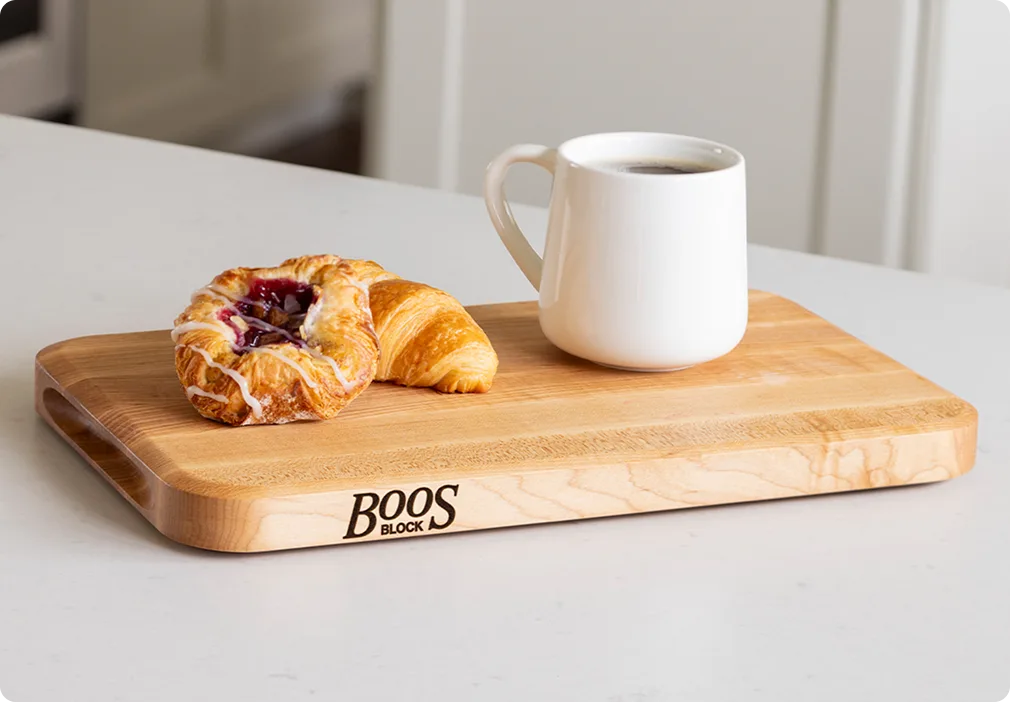
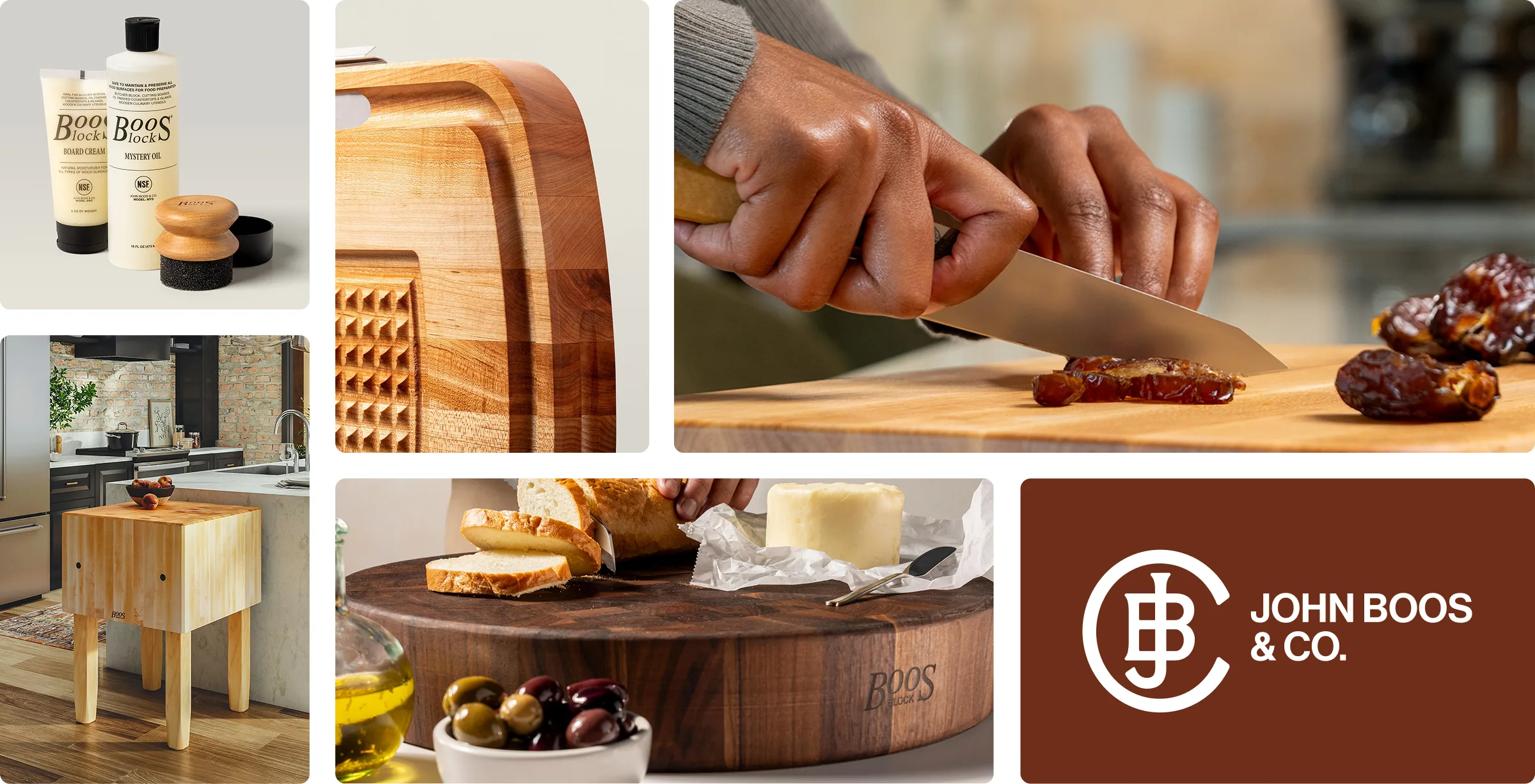
For more than 130 years, John Boos & Co. has been synonymous with craftsmanship in the world’s finest kitchens. From iconic butcher blocks to stainless steel workstations, the company’s products serve both commercial foodservice environments and high-end residential kitchens—each with exacting standards and unique requirements.
That legacy of quality, however, masks a modern reality. John Boos is not a simple manufacturer with a narrow catalog. It is a highly complex organization serving multiple verticals, supporting vastly different product motions, and managing a portfolio that spans make-to-stock, configure-to-order, and engineer-to-order products.
Britt East, Chief Information Officer at John Boos & Co., described the challenge plainly: despite its relatively straightforward value offering, the business is remarkably complex with product data demands that far exceed what in-house tools or lightweight solutions can support. “What’s so important to understand about John Boos is the breadth of the product line from a manufacturing standpoint,” East shared. “We have a lot of make-to-stock products. We do a ton of configure-to-order products, many of which feel like one-offs tailored to specific construction project requirements, even in luxury residential kitchens. And then, of course, engineer-to-order products as well.”
As John Boos looked toward its next phase of growth, complexity became impossible to ignore. The company was modernizing its technology stack, aligning to a long-term growth plan, and preparing for a future that would demand faster go-to-market execution across channels and verticals.
What quickly became clear was that product experience—not just product design—could be both a valuable asset and a limiting factor. Without a structured, scalable way to manage product information and master data, the organization risked bottlenecks in everything from operational logistics to configuration and quoting to downstream activation.
“The stakes were high, and the technology decisions would shape the business for decades,” East said. He emphasized that this was not a situation where a “checkbox” solution would suffice; it needed to fit the unique needs of the business today with the flexibility and scale to adapt to the opportunities and developments of tomorrow. Choosing a platform based on short-term cost factors would introduce long-term risk, likely forcing the company into a costly rip-and-replace scenario later. Protecting immediate budget mattered, but protecting future value and establishing a foundation for growth mattered more.



Prior to selecting a new platform, John Boos operated without a dedicated Product Information Management (PIM) or Master Data Management (MDM) system. Product knowledge lived across teams, systems, and files scattered across the organization, supported largely by institutional expertise built up over decades.
“We’ve never done data hygiene before,” East said. “This was a paradigmatic shift for our organization.”
While that approach had sustained the business historically, it was not designed for scale. As product assortments grew more configurable and customer expectations increased, the absence of a single source of truth created friction behind the scenes. There was too much siloed information, too much manual work involved, and too many potential points of failure for a stable path to growth.
Hard work and a long tradition of excellence were able to prevent customers from being directly exposed to these weaknesses, but they were increasingly visible to leadership trying to build a scalable foundation.
The decision to invest in product data was driven by a convergence of factors: new leadership, board-level growth ambitions, post-acquisition realities, and the recognition that product content sits at the center of nearly every critical workflow. Accurate, up-to-date product data is critical for shipping and warehousing, marketing and sales, compliance, customer experience, and more.
Rather than treating PIM or MDM as isolated IT initiatives, John Boos approached the decision as an architectural one, laying the foundation for how product experiences would be created, governed, and scaled across the enterprise.
As the evaluation process began, several requirements quickly emerged as non-negotiable. John Boos needed a single, unified platform capable of supporting both PIM and MDM- eliminating integration complexity between product and master data. The platform had to handle extreme configuration complexity, support multiple go-to-market motions, and scale with the business over time.

Equally important was the need for a true partner. As much as it needed fit-for-purpose software, the organization was also looking for a long-term relationship that could support executive level decision making, implementation discipline, and future expansion.
John Boos ultimately selected Syndigo to serve as the core data backbone for its transformation. The engagement represented a comprehensive, cross-disciplinary solution suite, spanning PIM, MDM, Options Management, Integration Studio, and Digital Shelf Analytics.
Rather than focusing on features in isolation, the approach centered on outcomes: creating a single source of truth, automating complex product configurations, and enabling downstream activation without manual rework.
East described the platform as having the horsepower required to support John Boos’ highly configured products, something that other solutions in the market fell short of delivering.
What ultimately differentiated Syndigo, however, extended beyond technology.
From the early stages of the evaluation, Syndigo introduced an implementation partner into the conversation—ensuring that solution design, execution, and long-term viability were addressed together. This consultative approach helped John Boos visualize not just what the platform could do, but how it would fit into a broader transformation roadmap.
The collaborative ROI modeling process also played a critical role. Rather than presenting a static business case, the Syndigo team worked alongside East to build, test, and refine a model that could stand up to executive and board scrutiny.
For a CIO still building trust in a new role, that partnership proved essential.

The outcome of this initiative was not a single operational metric, but a meaningful shift in confidence and clarity across the organization.
With a unified product data foundation defined and a clear roadmap in place, John Boos aligned leadership, technology, and execution around a shared vision for the future. The organization moved forward with greater confidence that its product experiences—across commercial and residential channels—could scale without introducing unnecessary risk or complexity.
Just as importantly, the evaluation and planning process reduced long-term execution risk. By treating product data as core infrastructure rather than a tactical project, John Boos avoided short-term decisions that would have limited flexibility later. The result is a foundation designed to support complex configurations, evolving go-to-market models, and future expansion without constant rework.

Today, John Boos is laying the groundwork for a new era of product experience that honors its heritage while embracing the realities of modern, data-driven commerce. “We are going to shock and disrupt our entire category,” East shared.
With a unified product data foundation in place, the company is positioned to accelerate configuration, automate documentation, onboard partners more efficiently, and activate product content across channels with confidence.